Share this email
OUR BEST IDEAS, QUICK AND CURATED | AUGUST 19, 2022
This week, how people with resources and networks (or just the will to change things) can give back. Plus, an interview with Morgan Stanley chairman and CEO James Gorman, and the plentiful picks on McKinsey’s annual summer reading list.
You’ve done it. After another busy year, you’ve made it to that beach—or mountain range, piazza, or ancient ruin—to stare at a beautiful vista and ponder . . . nothing at all. But once you’ve wound down, it might be time to take a little stock. You’re a lucky person. How can you give back?
Many people yearn to help minimize suffering and promote flourishing within their societies. Yet it can be difficult to figure out how to do that on an individual level. McKinsey and Ashoka, a leading global network of social entrepreneurs, recently joined with Echoing Green, Generation Pledge, and Catalyst 2030 to produce a new report—Influence for good: How highly resourced individuals could work towards positive systemic change.
Discovering. The report, as the title suggests, focuses on highly resourced individuals—those with the means and networks that make them well positioned to deliver impact. It highlights the Look–Envision–Build (LEB) model created by Generation Pledge, a community of individuals with inherited wealth who seek to mobilize their financial, social, career, and political capital to generate more significant change.
Changing. However, money doesn’t have to be a prerequisite; anyone who wants to participate in causes that matter to them can learn from the LEB framework. People may “look” at how their assets, investments, and conduct contribute to the status quo, especially on social issues. Then they can “envision” an action plan in areas where they feel they can do the most good. After that comes the “build” phase, when groundwork translates into action.
Amplifying. There’s no question that change management is hard for individuals, organizations, and governments alike. Most systems operate according to status quo—a natural equilibrium that is difficult to disturb without mighty efforts by individuals and teams. In a 2021 episode of the McKinsey on Government podcast, Kirk Rieckhoff, a McKinsey senior partner in Washington, DC, explains how to get people on board and achieve meaningful goals. “You’re only one person,” says Rieckhoff. “But you can amplify this aspiration if you have ten other people on board with you.”
Mindset is crucial. Maybe all the disturbing news out there is making you feel you can’t change anything. But it’s possible to reframe the root causes of mindsets that block change. It also helps to recognize that you have more influence on other people than you may think. In a 2021 Author Talks interview, the social psychologist Vanessa Bohns discusses why failing to recognize our ability to influence can lead us to miss opportunities. “We walk through our lives, and we don’t realize how many people notice us and, because they notice us, how many people might imitate our behavior, or change their behavior because of something we did or said,” Bohns notes. “And so we also have this sense of obliviousness at times about the trail of chaos or trail of positivity that we leave behind us.” A trail of positivity sounds a lot nicer.
OFF THE CHARTS
In 2021, more than 40 percent of core retail banking sales originated digitally, representing a new high. At the same time, a 4 percent increase in digital sales was not enough to compensate for a 15 percent decline in the still-larger branch channel when facilities became inaccessible early in the pandemic. Accelerating digital and upgrading the physical experience to “phygital” offers a viable solution to the problem of banking distribution. But questions remain: Can digital channels replace branches as the dominant sales channel for financial services? Did COVID-19 really accelerate a permanent channel shift, or will customer behavior trend back toward historical habits when the pandemic recedes? The responses to McKinsey’s Retail Banking Survey offers banks some guidance on how to answer these questions.
PODCAST
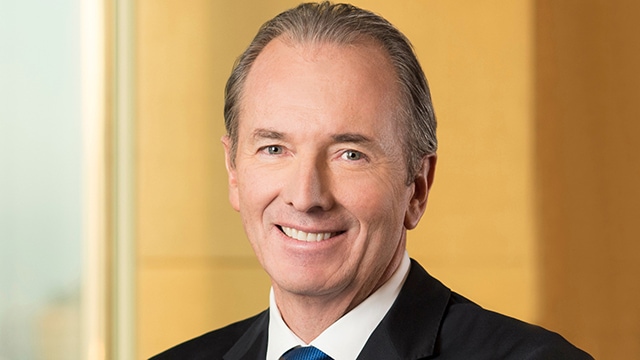
In a recent episode of McKinsey’s Inside the Strategy Room podcast, James Gorman, chairman and CEO of Morgan Stanley, explains how he reshaped the firm in the wake of the 2008–09 financial crisis by relying on his fundamental views of where the financial-services industry was heading. He also talks about reshaping Morgan Stanley’s strategy, why a company’s culture needs a stable foundation, and how to balance the chances of catastrophic risk with confidence in natural strengths. “It’s like playing poker,” Gorman notes. “When you’ve got the cards, you’re aggressive. You never know if you’re going to win, but if the odds are way in your favor, you get aggressive. It’s a combination of being extremely conservative managing against catastrophic risk and extremely aggressive when you’ve got the cards.”
More on McKinsey.com
It’s time to become a digital investing organization | AI and other digital technologies are ushering in the next horizon of performance differentiation in the investment sector. Here’s how to level up.
Industrial electrification and value creation | Electrification brings major opportunities for industrial companies across the value chain—from integrators to raw-material suppliers—but also requires timely actions and investments.
Why rising fuel prices might not be as bad for the airline sector as it seems | Fuel price hikes put the airline industry under strain—but may prompt airlines to limit overcapacity, leading to better returns and industry stability.
WHAT WE’RE READING
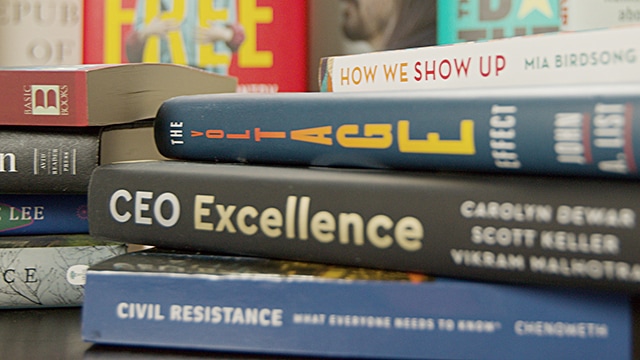
It’s not too late to pick up a tome or two as the summer winds down. McKinsey asked a range of leaders around the world to share what they’re reading—and hope to read. They selected books on topics covering everything from politics, government, and history to science, technology, and workplace culture. It didn’t surprise us that CEOs and other leaders gravitated toward genres that offer not just possible answers to global challenges but also historical context and lessons. Plus, there is plenty of poetry, psychology, and fiction thrown in to provide a much-needed respite for readers. Check out our annual guide here.
— Edited by Barbara Tierney
Share this What We’re Reading
BACKTALK
Have feedback or other ideas? We’d love to hear from you.
Follow our thinking
Share these insights
Did you enjoy this newsletter? Forward it to colleagues and friends so they can subscribe too. Was this issue forwarded to you? Sign up for it and sample our 40+ other free email subscriptions here.