| This week, how companies can protect their most valuable assets in an age of cyberattacks. Plus, the president of Dow on a merger that changed the landscape of the chemical industry, and a new edition of McKinsey for Kids on what technology shifts mean for tomorrow’s jobs. |
|
|
|
| October is Cybersecurity Awareness Month. As if this year were not hair raising enough, cybercriminals have continued to launch major ransomware attacks—with widespread consequences. This rash of recent attacks has, in some cases, resulted in companies making large ransom payments to get their operating systems back online. |
| They’re out there. As more and more organizations have digitized, cybersecurity threats are increasing both in number and seriousness. These days, hackers aren’t just trying to steal personal data—they can also bring down critical infrastructure and global supply chains with just a few lines of code. Geopolitical risk is also upping the ante. So how can companies protect themselves and their stakeholders? |
| Building resilience. With attacks against critical infrastructure becoming a growing threat, companies urgently need to build technological resilience. Investing in secure and flexible operating systems is a good place to start. Many companies in critical sectors may have outdated IT systems, leaving them particularly vulnerable. More resilient organizations manage data in a way that prioritizes privacy, and they implement IT projects on time. |
| Key vulnerabilities. Our survey of more than 100 organizations in a variety of sectors revealed that 70 percent of companies could do much more to protect their most valuable assets. The most mature companies have a dedicated cybersecurity function that proactively manages risk. These companies tend to design products, processes, and services themselves to be secure, in addition to using cutting-edge technologies—such as AI and big data—to oversee and defend their operational systems. Most organizations, however, have not reached this level of cyber maturity. Rather, they typically plug gaps and address security concerns only as they arise—an ad hoc approach that leaves them vulnerable. |
| Zero-trust systems. As a baseline, companies need to establish real-time visibility into their operating systems and critical assets. Building resilience will also require companies to better understand their operating systems, so owners and operators can more easily discern subtle changes that might indicate a threat. Leaders must also move to a “zero trust” approach, since hackers are increasingly exploiting trust-based operating models. Many cybercriminals disguise their attacks by mimicking the appearance of a normal state of operations, even as malware spreads. Companies need to proactively hunt for threats and deploy multiple layers of defense (such as the use of firewalls, segmenting networks, and requiring strong passwords), so that events can be rapidly discovered and contained. Stay safe out there. |
|
|

|
| OFF THE CHARTS |
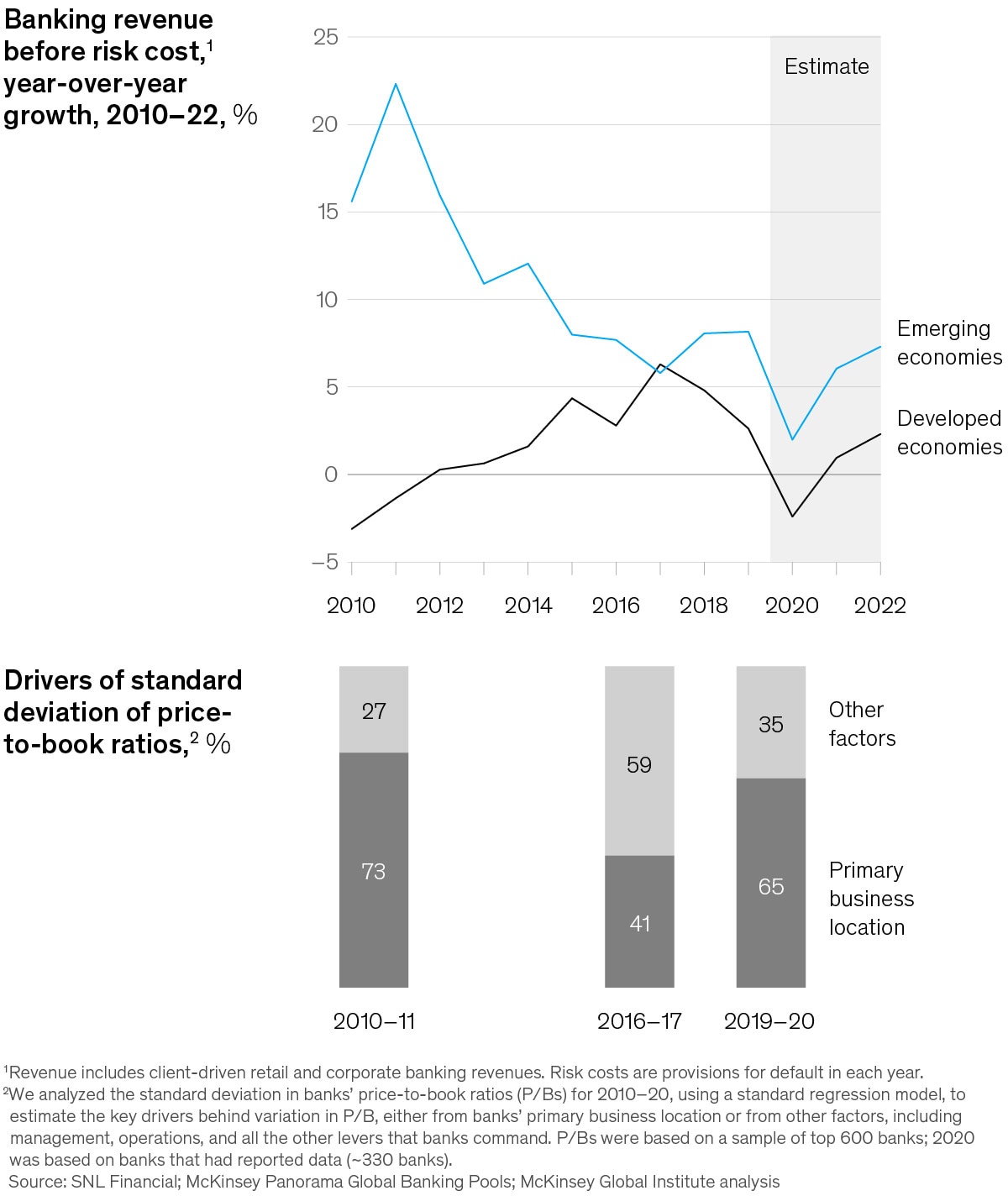
| In banking, it’s location, location, location |
| There are many factors that make or break banking performance, but right now, location is the biggest. Our analysis indicates that as revenue growth diverges for developed versus emerging economies, value is more closely connected with geographic location. In fact, a bank’s primary business location makes up about 65 percent of the standard deviation in price to book (P/B). |
|
|
|
|
|
|
|
|
| PODCAST |
| Chemistry counts |
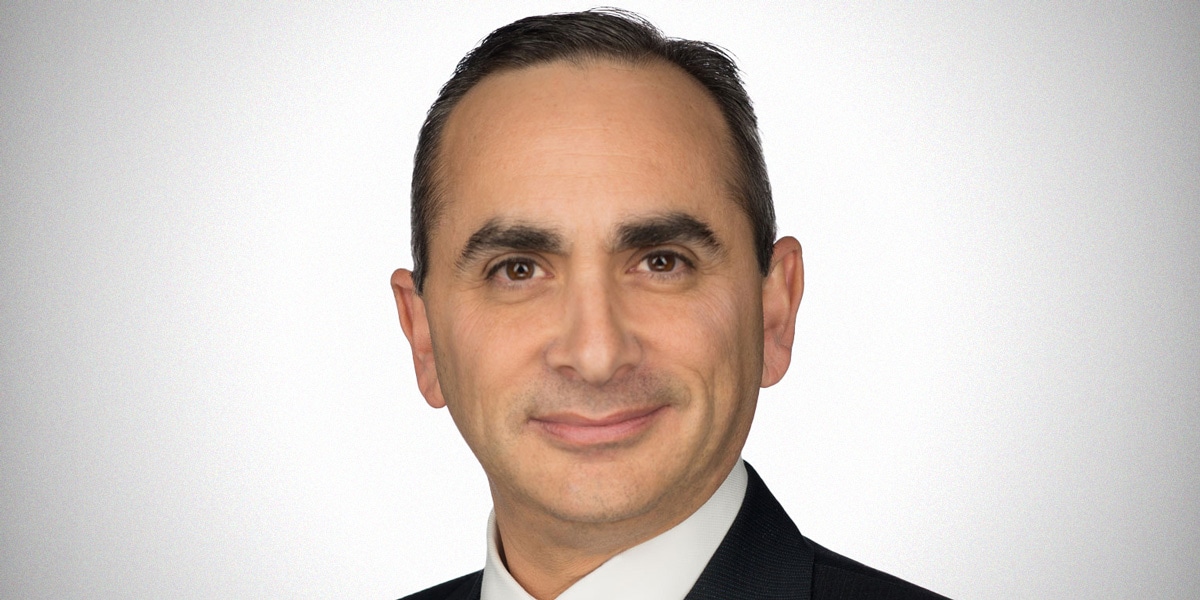
| In this episode of Inside the Strategy Room, Dow president Howard Ungerleider talks to us about the 2017 merger of Dow Chemical and DuPont, followed by its split into three separate companies—a huge, lengthy, and complex undertaking. “With anything we do, we think about the best-case scenario, the worse-case scenario, and the most likely scenario. Then I take the best case and throw it away because if the best case happens, it’s not a problem,” Ungerleider said. |
|
|
|
|
|
|
| McKINSEY FOR KIDS |
| Your coworker could be a robot |
| Have you ever talked to your kids about which jobs will still be around when they’re ready to start a career—or what cool new jobs might exist? Whatever your kids’ interests, it’ll help to know what skills will be in demand for the jobs of tomorrow. The latest edition of our McKinsey for Kids series can help. |
| Taking a spin through the centuries reveals that every age has produced its own technological marvels. From steam-powered engines to the world’s first digital computers and today&rsrsquo;s self-driving cars, advances in technology have increased productivity, contributed to a more highly skilled labor force, and raised our standard of living. But given the rapid pace of change, what might the world look like even in the next decade? |
| Building on the McKinsey Global Institute’s ongoing research on the future of work, this edition explores which skills will be important to future workplaces—and what it will be like to work alongside, and compete for jobs with, robots. Spoiler alert: robots don’t have the social and emotional skills employers are looking for. In fact, robots are more likely to be performing the parts of the job that are either physically demanding or routine. |
| Kids can also explore which jobs are more likely to be growing and shrinking in various areas of the world. For instance, China’s aging population and increased incomes mean that healthcare jobs could see a big jump in demand. In India, while demand for jobs in agriculture will likely slow, the country could also add millions of well-paying jobs in education, healthcare, and transportation, among other fields. And in the US, it might get a lot harder to find food- and customer-service employment, but demand for careers in STEM could intensify. |
| The edition also features a brief careers quiz that might reveal that your kids are already doing some things to prepare for a bright future. |
|
| — Edited by Belinda Yu |
|
|
|
| BACKTALK |
| Have feedback or other ideas? We’d love to hear from you. |
|
|
|
|
|
|
|
Copyright © 2021 | McKinsey & Company, 3 World Trade Center, 175 Greenwich Street, New York, NY 10007
|
|
|
|