|
October 5, 2018 |
|
 |
| Weekly need-to-know content |
|
|
|
|
| Welcome to the Shortlist: new ideas on timely topics, plus a few insights into our people. Subscribe to get it in your inbox on Fridays. Scroll down to see what Mary Meaney, a senior partner and expert on performance and organizational health, is reading. |
|
|
|
| Your organization is agile like (A) a leaping gazelle or (B) a lumbering elephant. You want to pick (A), but sometimes (B) might be more accurate—no offense to elephants. |
| The principles behind organizational agility are well-known by now. Agile groups can thrive in an unpredictable, rapidly changing environment. They are both stable and dynamic. They focus on customers, fluidly adapt to environmental changes, and are open, inclusive, and nonhierarchical; they evolve continually and embrace uncertainty and ambiguity. |
| It sounds so easy, doesn’t it? Yet even as agile concepts have taken hold, the average large firm reorganizes every two to three years, and the average reorganization takes more than 18 months to implement. Agility doesn’t mean constant reorganization or constant flux, though. It means building a structure that allows people to react in real time. |
| To organize for our current age of urgency, companies have to take the principles behind agile and use them a little differently. Let’s call them the three “insteads”: Instead of making a decision when you have 90 percent of the information, make it when you have 70 percent. Instead of imposing decisions from top down, encourage real-time decisions across your organization, decoupled from title or rank. Instead of relying on charismatic leaders who get results by force, recognize that leadership can come from anyone, and is earned not appointed. |
| The urgency imperative places a premium on agility, which helps enable the shift to an emergent strategy, while unleashing your people so they can reshape your business in real time. It’s also a powerful means of minimizing confusion and complexity in our world of rapid-fire digital communications where everyone can talk with everyone else—and will, gumming up the works if you don’t have a sensible set of operating norms in place. Agility is also the ideal way to integrate the power of machine-made decisions, which are going to become increasingly important. |
| In the spirit of urgency, we’ll close by directing you to The five trademarks of agile organizations, written collaboratively by the McKinsey Agile Tribe. |
|
|
| OFF THE CHARTS |
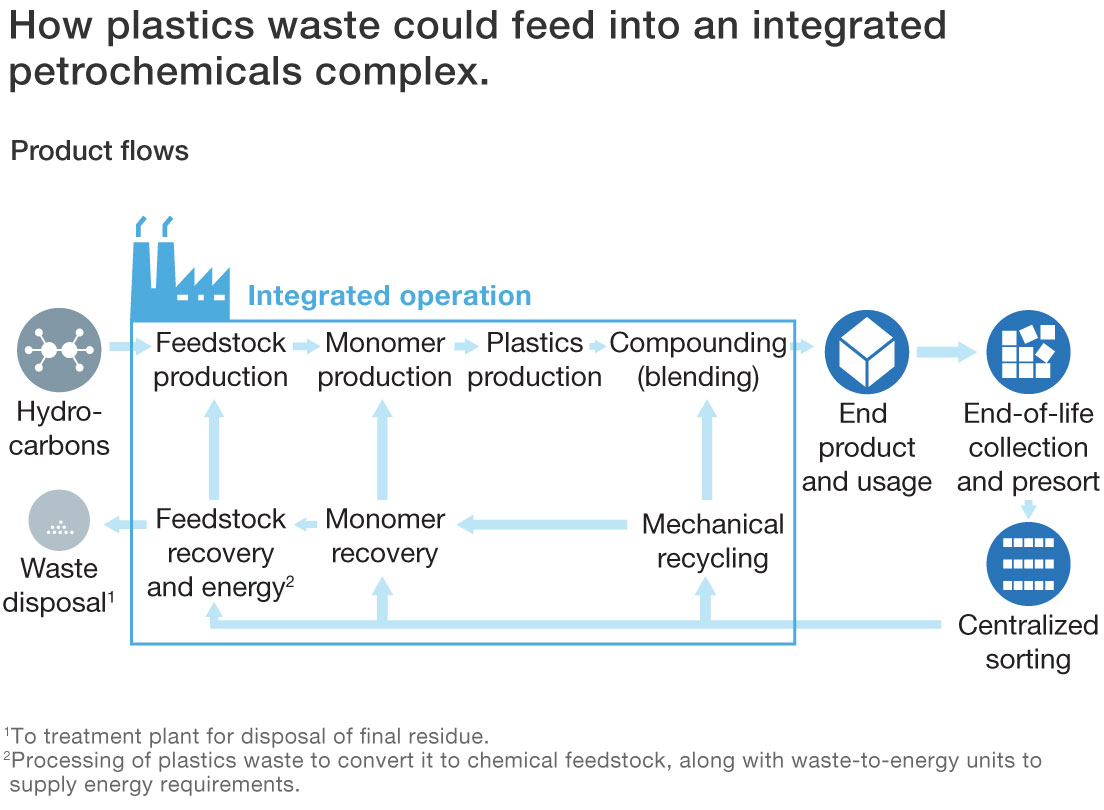
| No time to waste on plastics waste |
| Facing global environmental concerns, chemicals producers have started to acknowledge that the “use once and discard” model should be replaced by a new standard in which plastics are recycled as much as possible.
|
 |
|
|
| MORE ON MCKINSEY.COM |
| Does your airline still cross seatbelts? | Wasteful processes abound at many supposedly lean airlines. Here’s a ten-point lean checklist for leaders. |
| Construction disruption | A new study of the engineering and construction sector shows it is catching up on digitization, with accelerating tech investment and constellations of promising use cases. |
| Is big really beautiful? | Many governments are thinking about merging their multifarious pension systems. New research finds real benefits, but the trick is in actually capturing them. |
|
|
| WHAT WE’RE READING | Mary Meaney |
|
|
| In my work, I frequently encounter business leaders who want to improve their corporate environment but are not sure how to do it. Daniel Coyle’s The Culture Code: The Secrets of Highly Successful Groups delves into how the best organizations build relationships, create trust (showing your vulnerabilities helps), and communicate a shared purpose. He highlights an experiment in which kindergartners outperform MBA students in building a spaghetti tower with a marshmallow on top. The exercise, while fun, also illustrates an important point about psychological safety and a willingness to experiment and learn. |
| A classic worth rereading: Nudge: Improving Decisions About Health, Wealth, and Happiness, by Richard H. Thaler and Cass R. Sunstein. Thaler won the Nobel Prize for his groundbreaking work on behavioral economics, at the intersection of economics and psychology. I’m fascinated by how the latest insights in neuroscience combined with behavioral “nudges”—ways to move people away from their biases and toward better decisions—can have truly spectacular impact in a range of businesses. |
| And last but by no means least, I loved McKinsey alumna Joanna Barsh’s latest book, Grow Wherever You Work: Straight Talk to Help with Your Toughest Challenges. It’s a how-to guide to learn from mistakes, which are simply inevitable in everyone’s work life. She shows how to bounce back from negative performance reviews, handle a nasty colleague, take big risks, and realize when it’s time to move on. |
|
|
|
| BACKTALK |
| Have feedback or ideas? We want to hear from you. |
|
|
|
|
| |