| This week, climate change in the year of COVID-19. Plus, problems with the US blood supply, and how CFOs can tackle 2021 budgeting. |
|
|
|
| Infernal wildfires. Epic droughts. Drenching hurricanes. Melting glaciers. Climate woes have returned with a vengeance—as if to say, we know you’re preoccupied with the pandemic, but remember Mother Nature. |
| McKinsey has conducted in-depth analyses in articles like “Climate risk and response: Physical hazards and socioeconomic impacts” and
“Valuing nature conservation.” And to mark Climate Week NYC, we’re offering a collection of research and perspectives on the challenges and potential solutions that lie ahead. With so many knock-on effects of a changing climate, we thought we’d look at how it might affect what you eat and drink. |
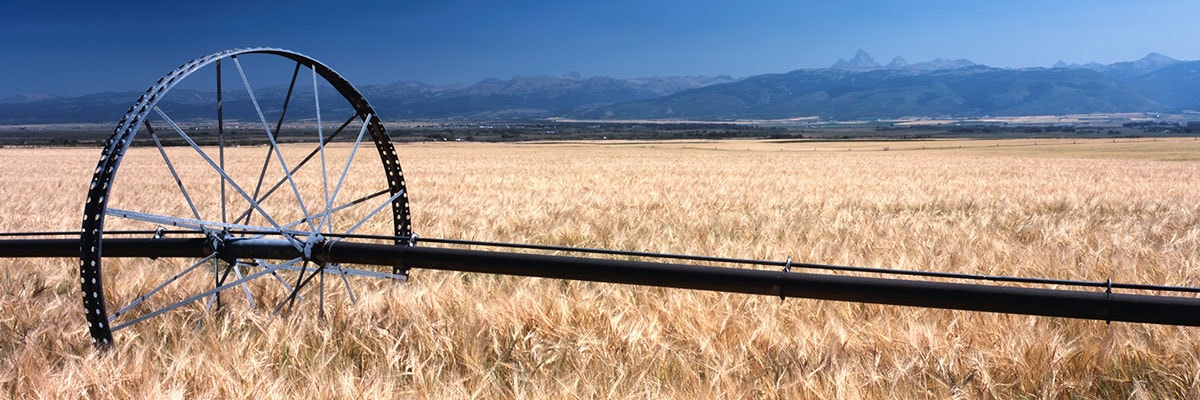
| First, breadbaskets. McKinsey examined the likelihood of a harvest failure occurring in multiple breadbasket locations as well as the potential socioeconomic effects. The analysis suggests that a multiple-breadbasket failure—enough simultaneous shocks to affect global production—becomes increasingly likely in the decades ahead, driven by an increase in both the likelihood and the severity of climate events. |
| Here’s a prime example: In August, a derecho swept through Iowa, bringing severe winds and significant precipitation across many parts of the state. Nearly 12 million acres of cropland were affected, representing about 50 percent of the 24.7 million acres planted in the state in 2020. An estimated 3.1 million to 3.8 million acres of corn and soybeans were damaged. |
| Addressing shortages. Following the food shortages of the early 2000s, the G-20 developed an action plan to reduce price volatility. That was a good response, but governments can also manage domestic grain prices by stockpiling when prices are low and releasing grain when prices rise, to create a price ceiling. They can also subsidize private-sector storage or invest in improved transportation infrastructure. |
| Effects on the world’s poor. Short-term price hikes due to acute climate stress could significantly affect the well-being of 750 million of the world’s poorest people. Increasing production and storage in good years and promoting flexibility in the use of food crops to maximize calories consumed could go a long way to lessen that risk. |
| Case study: Africa. Climate change is expected to make agricultural development in Africa more challenging, as extreme weather patterns increase the volatility of crop and livestock yields. For coffee farmers in Ethiopia, for example, the chance of experiencing a 25 percent or greater drop in annual yield could climb from 3.2 percent to 4.2 percent in 2030—a 31 percent increase. |
| Case study: Mediterranean basin. Every year, tourists flock to Mediterranean countries for the mild climate, wine and food, and stunning scenery (or at least they did before COVID-19). Climate change may alter that lovely mix: the mean temperature in the Mediterranean basin has increased by 1.4 degrees Celsius since the late 19th century, compared with the global average of 1.1 degrees—and, absent targeted decarbonization, temperatures are projected to increase by an additional 1.5 degrees by 2050, making the Mediterranean climate more vulnerable to drought, water stress, wildfires, and floods. |
| In vino veritas. Nearly half of the Mediterranean region’s agricultural production value comes from four crops: grapes (14 percent) and wheat, tomatoes, and olives (9 percent each). Some studies project that the Mediterranean area suitable for viticulture could fall by up to 70 percent. As the Mediterranean region becomes warmer, it is also likely that specific grape varieties will no longer grow where they do now (for example, Merlot in Bordeaux), though the opportunity to plant new varieties may rise. The good news is that wine growers are already taking measures to adapt, turning to grape varieties that require less water, or harvesting earlier. |
| On the horizon. Innovation and advanced technologies could make a powerful contribution to secure and sustainable food production. For example, digital and biotechnologies could improve the health of ruminant livestock, requiring fewer methane-producing animals to meet the world’s protein needs. Genetic technologies could play a supporting role by enabling the breeding of animals that produce less methane. Data and advanced analytics also could help authorities better monitor and manage the seas to limit overfishing. Agriculture is a traditional industry, but its quest for tech-enabled sustainability shows the path forward. |
|
|
 |
| OFF THE CHARTS |
| Where the US blood supply runs low |
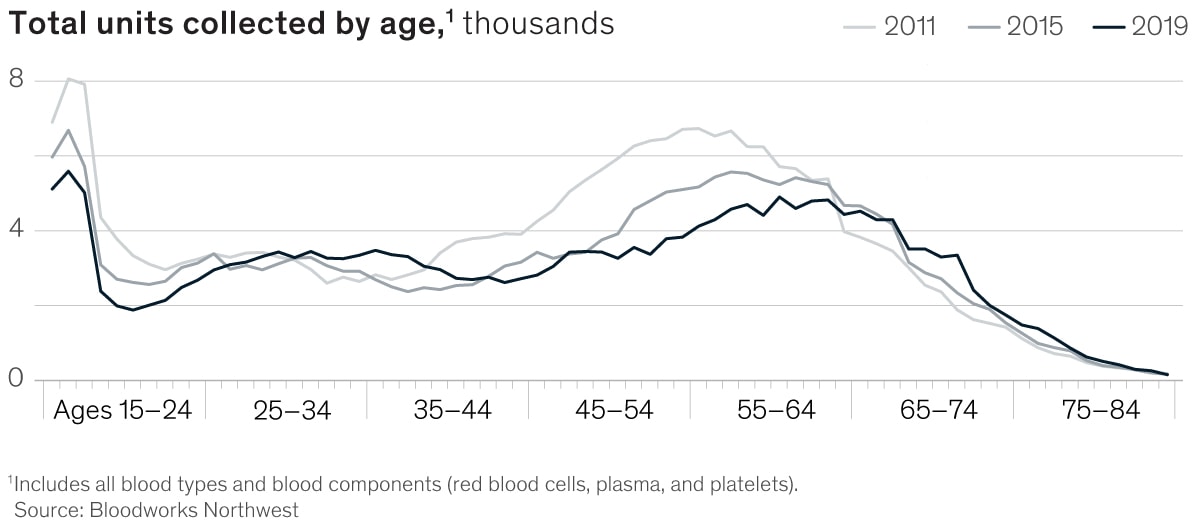
| For a system that relies on the altruism of contributors, an aging class of blood donors and changing attitudes about donation put the nation’s blood supply at risk. We can see that in the Pacific Northwest, where a perilously low stockpile of blood and blood products could greatly affect the region’s workforce and their families. Donors aged 45 and older account for 63 percent of the total blood volume collected from repeat donors. But baby boomers are aging out of the donor pool, and first-time donors aren’t replenishing their ranks. |
|
|
|
|
| |
| MORE ON MCKINSEY.COM |
| Memo to the CFO: A new approach to 2021 budgeting starts now | The financial-planning process for next year presents an opportunity to turn hard-earned lessons from the COVID-19 pandemic into an enduring exercise in linking strategy to value. |
| Achieving Vietnam’s long-term growth goals | Vietnam has the elements in place to continue as an outperformer—growing disposable income, investment in infrastructure, and an attractive business environment. Adjustments in four broad areas can help it get on the right path. |
| How governments can combat intensifying cybersecurity risks | Partnerships that involve other players in the cybersecurity ecosystem—in the private sector, academia, and other public-sector areas, both local and international—are crucial to combat a country’s cybersecurity risks. |
|
|
|
|
|
| THREE QUESTIONS FOR |
| Oliver Tonby |
| Oliver Tonby, a senior partner in Singapore and the chairman of McKinsey’s offices in Asia, is a member of Singapore’s Future Economy Council and works with oil and gas, energy, and industrial companies on strategic, development, and operations issues. |
|
|
|
|
| We know that climate change will affect Asia, as it will affect all parts of the globe. What are the particular climate hazards facing the region? |
| Asia, which we actually split into four regions in our recent research article, faces a range of climate hazards, with potentially different impacts depending on geography. Our research focused on the RCP 8.5, a higher-emission scenario that enabled us to assess the full inherent physical risk of climate change in the absence of further decarbonization. |
| Frontier Asia—Bangladesh, India, and Pakistan—could see extreme increases in heat and humidity, which may significantly affect workability and livability. |
| Emerging Asia—Cambodia, Indonesia, Laos, Malaysia, Myanmar, the Philippines, Thailand, and Vietnam—also expects to see increases in heat and humidity. And the region could experience growing exposure to extreme precipitation events and flooding. |
| Advanced Asia—Australia, Japan, New Zealand, and South Korea—expects to experience a slightly lower level of climate-change effects. For some countries in the region, the impact on water supply and the possibility of drought are the main challenges. By 2050, southwestern parts of Australia are expected to spend more than 80 percent of a decade in drought conditions. |
| China sits in its own category. The country on aggregate is projected to become hotter, and eastern parts could see threats of extreme heat, including lethal heat waves, while central, northern, and western China could experience more frequent extreme precipitation events. |
| What are the potential socioeconomic impacts? |
| Our analysis finds that effects of intensifying climate hazards could in many cases be more severe for Asia than for other parts of the world, in the absence of adaptation and mitigation. Under RCP 8.5, by 2050, between 600 million and one billion people in Asia will be living in areas with a nonzero annual probability of lethal heat waves. That compares with a global total of 700 million to 1.2 billion; in other words, a substantial majority of these people are in Asia. |
| By 2050, on average, between $2.8 trillion and $4.7 trillion of GDP in Asia annually will be at risk from a loss of outdoor working hours because of increased heat and humidity; that accounts for more than two-thirds of the total annual global GDP impact. Finally, about $1.2 trillion in capital stock in Asia could be damaged by riverine flooding in a given year by 2050, equivalent to about 75 percent of the global impact. |
| How can policy makers and companies implement strategies that will mitigate some of the effects of climate change? |
| The onus is on policy makers, companies, and individuals to pursue strategies that will soften the impact and enable economic activities to continue to their maximum potential, even as they consider how to mitigate the rise in carbon emissions and avoid an even more damaging scenario in future decades. These goals will require ambition and a concerted effort to build on and extend recent successful efforts. |
| However, in many ways, Asia is well placed to lead global adaptation and mitigation efforts. A significant opportunity lies in infrastructure development. To maintain its current growth trajectory, Asia must invest $1.7 trillion annually through 2030, according to the Asian Development Bank. Incorporating climate adaptation into projects will make a difference to regional development and resilience. As they build out their economies, policy makers in Frontier Asia and Emerging Asia can exploit synergies between infrastructure needs and opportunities for emissions reductions. Stakeholders can also embrace public–private sector collaboration and explore new approaches to incorporate climate factors into planning. |
|
|
|
| — Edited by Barbara Tierney |
|
|
| BACKTALK |
| Have feedback or other ideas? We’d love to hear from you. |
|
|
|
|
| Copyright © 2021 | McKinsey & Company, 3 World Trade Center, 175 Greenwich Street, New York, NY 10007 |
|
|
|