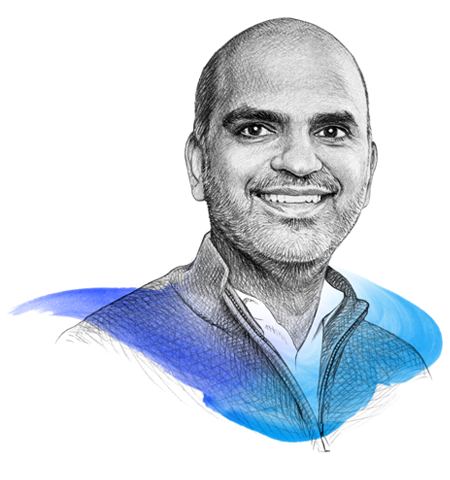
Maximizing every dollar in the data center race

|  | | | |
ON DATA CENTER INVESTMENT
Investing in data centers today for ROI tomorrow
| | | | | | | | | | | |
| To keep pace with the AI boom, investors could pour $7 trillion into building data centers over the next five years. Will this effort generate enough compute capacity for organizations to meet their AI goals, while also delivering ROI to investors? If stakeholders act strategically, anticipating potential roadblocks and planning for risks, the outlook is promising.
There’s no doubt that building the compute capacity needed for AI workloads will be expensive. There is almost unquenchable demand for AI, which is expected to fuel three-quarters of compute-power needs by 2030. High demand means high prices for the materials needed to build data centers and the energy to fuel them. This demand is compounded by low supply, both of chips and power. Increasing compute capacity also requires expensive architectures such as powerful GPUs and high bandwidth memory. And all these processors need a lot of liquid cooling, which is also costly.
It will be a challenge for data center stakeholders—including real estate developers, chip makers, equipment providers, energy companies, AI model makers, hyperscalers, and others—to spend efficiently in this environment. To ensure healthy ROI, they will need to invest quickly to stay ahead of competitors. But they will also need to invest prudently to mitigate potential risks. These include overindexing on pricey suburban locations, underestimating the challenges of rural locations (such as energy and water availability), or choosing hardware components that fast become outmoded.
Despite all these risks, there is one scenario—overbuilding too much data center capacity—that is not much of a risk at all. Emerging advances will almost undoubtedly drastically reduce the compute power needed to train models. But the end result of these advances is unlikely to be a slew of empty data centers. Instead, spare capacity could be soaked up by more models, more use cases, and more innovation. Think of broadband and mobile networks. When bandwidth supply increased and costs came down, that created opportunities for myriad new businesses and markets that no one anticipated. Likewise, the more compute capacity that exists, the faster AI adoption will happen, creating even more capacity demand. By the end of the decade, it likely won’t be just large enterprises investing in AI, but also small and medium-sized businesses.
| | |
| | | “To keep pace with the AI boom, investors could pour $7 trillion into building data centers over the next five years.” | | | | |
| To ensure that investments into data centers today yield ROI tomorrow, stakeholders can take a customer-centric approach. Every investor should ask, “Who are our customers and what are their unmet needs?” For example, a real estate developer needs to understand the specific concerns of customers in different locations. In a suburban area, a builder might worry about issues such as noise pollution, strain on an already-taxed local power grid, or backlash from neighbors annoyed about traffic and aesthetics. In a rural location, a builder could face challenges such as securing adequate water supply, connecting to fiber optic networks, or protecting natural habitats.
Deploying capital in stages instead of all at once can help maintain flexibility and lessen risks. Investors can adopt a “through cycle” mindset, remaining committed to projects over the long haul. That means not getting sidetracked by near-term volatility—reacting to every bit of news in the AI space—but instead taking a holistic, long-term view of how the sector will evolve.
For business leaders whose companies are part of the data center value chain, it’s a once-in-a-generation chance to broaden what’s possible for humanity. An explosion in data center capacity could spur a wave of innovation, creating new AI use cases that we can’t even imagine today. But deciding how much to invest, in which projects, and in which geographies will not be easy. For leaders facing this challenge, the first step is self-assessment. They can ask themselves, “Where does my company fit into the data center value chain and what is its role in increasing capacity?” Instead of chasing shiny pennies—shifting this way and that to maximize short-term ROI—the most successful leaders will act based on an industrial logic, contextualizing where their companies sit within the ecosystem. They will clearly delineate valuable use cases for their customers and then stick to their plans to build the capacity required for those use cases.
| | | —Edited by Kristi Essick, executive editor, San Francisco | | |
| Share Pankaj Sachdeva’s insights
|
|
|
|
|
| | | | | | | | |
|
|
|
Copyright © 2025 | McKinsey & Company, 3 World Trade Center, 175 Greenwich Street, New York, NY 10007
|
|
|
|
|