| | | | | | |
Click to get this newsletter twice per month |
| |
|
| |
| | Brought to you by Alex Panas, global leader of industries, & Becca Coggins, global leader of functional practices and growth platforms
| | | | | | |
|
| | | | As geopolitics continues to reshape global trade, business leaders need to strengthen their ability to anticipate and respond to change. Tariffs, crises at economic chokepoints such as the Strait of Hormuz, and other global disruptions can pose risks for companies, but they also can provide opportunities for growth. This week, we look at how leaders can navigate this uncertain landscape and find ways to gain a competitive advantage. | | | |
| | | |
| Create playbooks for growth | | | | | | | realignment of global trade along geopolitical boundaries | | | | | | | interplay of geopolitical logic and market forces affecting trade in critical products such as rare earth magnets | | | | | | | need for more investment in strategic industries such as energy and semiconductors | | | | | | | shifting global investment flows, growing debt, and economic imbalances | | | | | | | growing trade in AI-related goods and varying access to AI models and infrastructure | | | | | | | diverging strategies for energy security and resilience | | | | |
| “The companies that are moving first to secure critical inputs, build competitive advantage, capture growth in trade corridors and capital flows, and build organizational agility are treating this reordering as an opportunity rather than a threat,” the authors say. | | | | That’s the share of organizations that describe their geopolitical risk management as “mature,” according to a McKinsey survey. McKinsey’s Ezra Greenberg, Ziad Haider, and their coauthors report that while 53 percent of respondents say scenario planning, real-time intelligence modeling, and other strategic foresight tools would improve their companies’ geopolitical resilience, fewer than 30 percent currently use such tools. | | |
| | | |
| | | “Chokepoints are not anomalies that exist beyond the bounds of the global economy; they are increasingly one of the ways the global economy is shaped.” | | | McKinsey’s Matt Watters, Mihir Mysore, Shubham Singhal, and Ziad Haider say economic chokepoints—dependencies with limited short-term substitutes, such as the Strait of Hormuz or markets for rare earth elements and semiconductors—present both challenges and potential advantages for multinational companies. Leaders need to assess their exposure to chokepoints, determine how much value is at stake, and identify where they can build flexibility before disruptions strike. “Those who develop a repeatable approach to managing chokepoints will not only be able to act in the moment but will also be better able to manage downside risk and position themselves to capture opportunities while others scramble,” the authors note.
| | |
| | | |
| | | |
| AI will transform how companies anticipate and prepare for geopolitical disruptions. “Without a doubt, the entire discipline of geopolitical assessment and risk management will be disrupted by AI. But I’d argue we’re probably still in the foothills of that, and we haven’t yet seen organizations using it at scale,” McKinsey Partner and Global Director of Geopolitics Ziad Haider says in an episode of The McKinsey Podcast. Yet as companies begin to use AI for scenario planning, simulations, and tabletop exercises, they will still depend on human creativity and collaboration. “There’s no substitute for a human when developing scenarios, which is an art of creativity and imagination when talking to a wide range of individuals, like policymakers, think-tank experts, and your peers in other businesses,” he says.
| | |
| |
| MANUFACTURING IN AMERICA | | | |
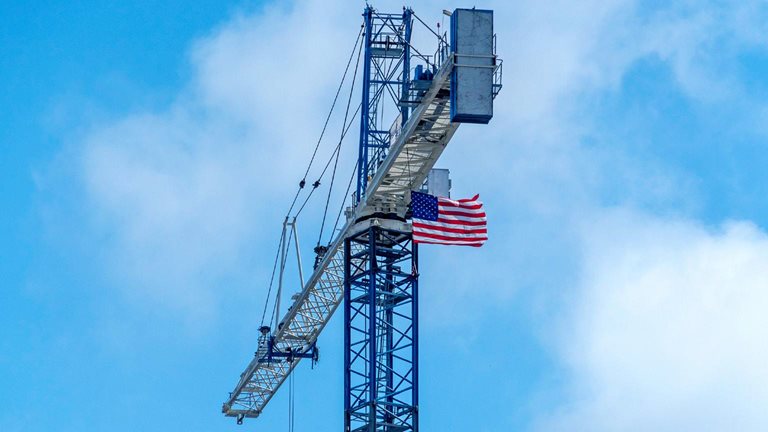
| Rising geopolitical tensions and technological progress are intensifying the debate over expanding US manufacturing. Addressing critical vulnerabilities in domestic production could cost roughly $2 trillion, according to a McKinsey Global Institute analysis. McKinsey’s Rebecca J. Anderson, Jeffrey Condon, Eric Kutcher, Shubham Singhal, Mike Conway, and their coauthors note that this effort would require thousands of new factories, as well as skilled workers and compelling business cases. The analysis finds that running existing US factories at peak capacity would generate about $660 billion more in output. But doing so “would not make much of a dent against imports where they are most critical and exposed to risks,” the authors say. “Producing those products domestically would require building out a manufacturing footprint unlike that in any one place in the world today.” | | | Lead by using geopolitical foresight to drive growth. | | | | | —Edited by Eric Quiñones, senior editor, New Jersey
| | |
| |
Click to get this newsletter twice per month |
|
| | |
|
|
|
Copyright © 2026 | McKinsey & Company, 3 World Trade Center, 175 Greenwich Street, New York, NY 10007
|
|
|
|
|
|