Pass the first test

| | | | | | |
Click to get this newsletter twice per month |
| |
|
| |
|
| | Brought to you by Alex Panas, global leader of industries, & Becca Coggins, global leader of functional practices and growth platforms
| | | | | | |
|
| | | | The pressure on new CEOs to get off to a strong start is mounting. Research shows that the average CEO tenure has fallen to an all-time low and that poorly managed C-suite transitions among S&P 1500 companies wipe out nearly $1 trillion in market value annually. As explained in McKinsey’s book A CEO for All Seasons: Mastering the Cycles of Leadership, each stage of a CEO’s journey contains distinctive opportunities and challenges. This week, we look at how new leaders can build early momentum by connecting effectively with key stakeholders. | | | |
| | | |
| | | One of the most important tests for incoming CEOs is navigating relationships with a new array of internal and external stakeholders, including employees, board members, investors, regulators, and members of the media. “This shift, compounded by social media and a proliferation of new technologies and channels, can make for a steep learning curve,” say McKinsey’s Blair Epstein, Carolyn Dewar, Richard Steele, and their coauthors. They outline a four-part approach to stakeholder communications that can help leaders thrive as they move into the top job: | | | | | Expand your view of the CEO role as a bridge to the outside world by taking listening tours, analyzing stakeholders’ expectations, and establishing strong peer networks. | | | | | | | Develop a distinctive personal narrative that will help you convincingly convey your most important messages. | | | | | | | Empower team members to serve as your ambassadors, sharing key messages throughout the organization and with external stakeholders. | | | | | | | Manage your time and energy while embedding stakeholder engagement into your daily operating model. | | | | |
| | | |
| | | “The soft stuff—influencing behavior change at scale—is the hard stuff, especially when getting started.” | | | McKinsey’s Scott Keller says one of the blind spots for new CEOs is overconfidence in their ability to change an organization’s culture. Incoming CEOs typically have a clear vision for the company’s direction but often underestimate the difficulty of aligning and mobilizing employees to achieve it, he observes. New CEOs can also misjudge how well they manage their personal effectiveness. “It often takes more time than they anticipate to balance being who they want to be with who the organization needs them to be in the role,” Keller says.
| | |
| |
| | | |
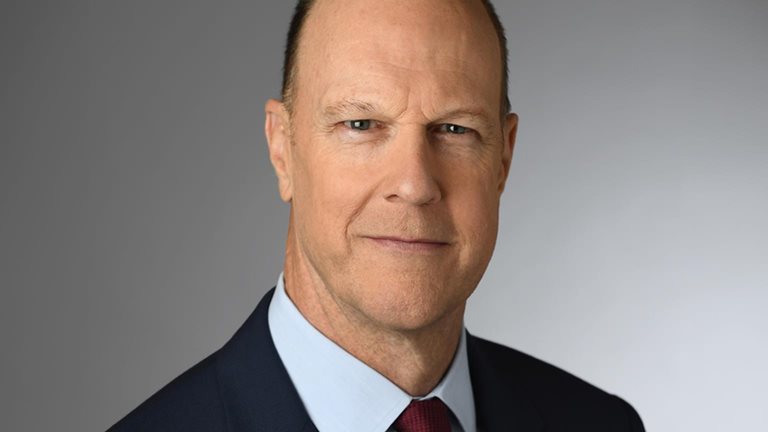
| New CEOs have a responsibility to build a pipeline of future leaders and to begin planning for succession. Charles Lowrey, former executive chairman and CEO of Prudential Financial, gave a presentation to the company’s board on his potential successors a month before taking over as CEO in 2018. Lowrey’s responsibility was “to not only identify potential candidates but also articulate to the board what their career paths would be to provide them with the experiences they needed to become serious candidates,” he says in an interview with McKinsey’s Carolyn Dewar on an episode of the Inside the Strategy Room podcast. Lowrey says he gave potential successors a range of opportunities to develop their leadership skills and regularly discussed their progress with the board to help inform the selection process.
| | |
| |
| | | |
| Incoming CEOs should be wary of one hurdle that can stifle progress: their own ego. Leaders can fall prey to egocentric anchoring, which is the tendency to project their own perspectives and experiences onto others. This problem can be compounded by authority bias, which leads team members to defer to leaders even when doing so conflicts with their own judgment. In an article from McKinsey’s Bias Busters collection, Richard Steele and Carmen James observe that CEOs can avoid these pitfalls by asking themselves whether their assumptions hold true for the whole organization or just for themselves. They can also guard against authority bias by encouraging dissent so a more complete picture of issues can emerge. “The objective is not to distrust experience, but to recognize its limits,” the authors say. “Leaders make better decisions not by abandoning their instincts, but by ensuring those instincts are informed by perspectives beyond their own.” | | | Lead by building stakeholder relationships from day one. | | | | | —Edited by Eric Quiñones, senior editor, New Jersey
| | |
|
Click to get this newsletter twice per month |
|
| | |
|
|
|
Copyright © 2026 | McKinsey & Company, 3 World Trade Center, 175 Greenwich Street, New York, NY 10007
|
|
|
|
|
|