| | | | | | |
Click to get this newsletter twice per month |
| |
|
| |
|
| | Brought to you by Alex Panas, global leader of industries, & Becca Coggins, global leader of functional practices and growth platforms
| | | | | | |
|
| | | | Robots have become a familiar part of the workforce over the past 50 years, helping companies boost productivity by performing specialized, repetitive tasks. Today, both their functionality and potential impact are evolving dramatically, according to The Next Normal, a McKinsey series on the future of industries. This week, we look at advances in robotics technology and how leaders can reimagine work as a stronger collaboration between humans and intelligent machines. | | | |
| | | |
| | | As organizations explore how to create value with AI, they can look to a rapidly approaching new frontier: physical AI. Robots will transform the workplace as they become more intelligent and gain more general-purpose skills, say McKinsey’s Ani Kelkar, Christian Jansen, and Zina Cole. Kelkar projects that robotics and physical AI will create at least $1 trillion in economic value between now and 2040 by spurring innovation in product development and workflows across sectors such as manufacturing, logistics, service industries, mining, and energy. As AI-powered robots improve their decision-making abilities, they will be able to function in more unstructured or unpredictable work environments and create greater opportunities for collaboration with humans. “By 2040, robotics will have evolved from task-specific automation solutions to task-agnostic ones,” Jansen says. “We will see robots with the ability to change tasks within hours by merely watching others doing it, seeing it more as team sport.” | | |
| | | | | | | That’s the potential size of the global general-purpose robotics market by 2040, according to an analysis by McKinsey’s Ahsan Saeed, Ani Kelkar, Christian Jansen, Mark Patel, Michael Chui, and their coauthors. Their projection assumes moderate progress in training data, hardware affordability, and integration capabilities, plus steady cultural and organizational adoption. Top cases could include warehouse logistics, light manufacturing, retail operations, agriculture, and healthcare. | | |
| | | |
| | | “Integrating AI will not be a simple technology rollout but a reimagining of work itself—redesigning processes, roles, skills, culture, and metrics so people, agents, and robots create more value together.” | | | McKinsey’s Anu Madgavkar, Alexis Krivkovich, Michael Chui, and their coauthors say US companies could unlock about $2.9 trillion of economic value by 2030 by fostering collaboration among humans, AI agents, and robots instead of simply applying AI to existing workflows. To transform their businesses for the AI age, leaders should establish cultures of experimentation and learning, build trust and safety, equip managers to lead new teams of people and machines, and prepare employees for different roles. “As jobs change and skill needs evolve faster, helping workers understand how their skills transfer to new types of work will make both people and businesses more resilient,” the authors say.
| | |
| | | |
| | | |
| Human expertise will remain critical in manufacturing even as enhanced automation reshapes workflows, says Mikell Taylor, head of robotics strategy at General Motors. “The roles that the people perform may be different, but they’re still going to make the orchestra play together to get the kind of manufacturing capability and capacity that we want,” she says in an interview with McKinsey’s Ani Kelkar. Taylor predicts that assembly-line tasks will remain heavily manual for a long time, but there will be opportunities for people and robots to share the same workspace in automotive and other manufacturing sectors. Robots are becoming better able to recognize people in their space and stop, slow down, or move around them to stay safe. “Now we also need software systems that allow people and robots to share work—to hand off work from one to the other, or to even work on the same thing at the same time,” Taylor says. “We need different models of collaboration or teaming.”
| | |
| |
| | | |
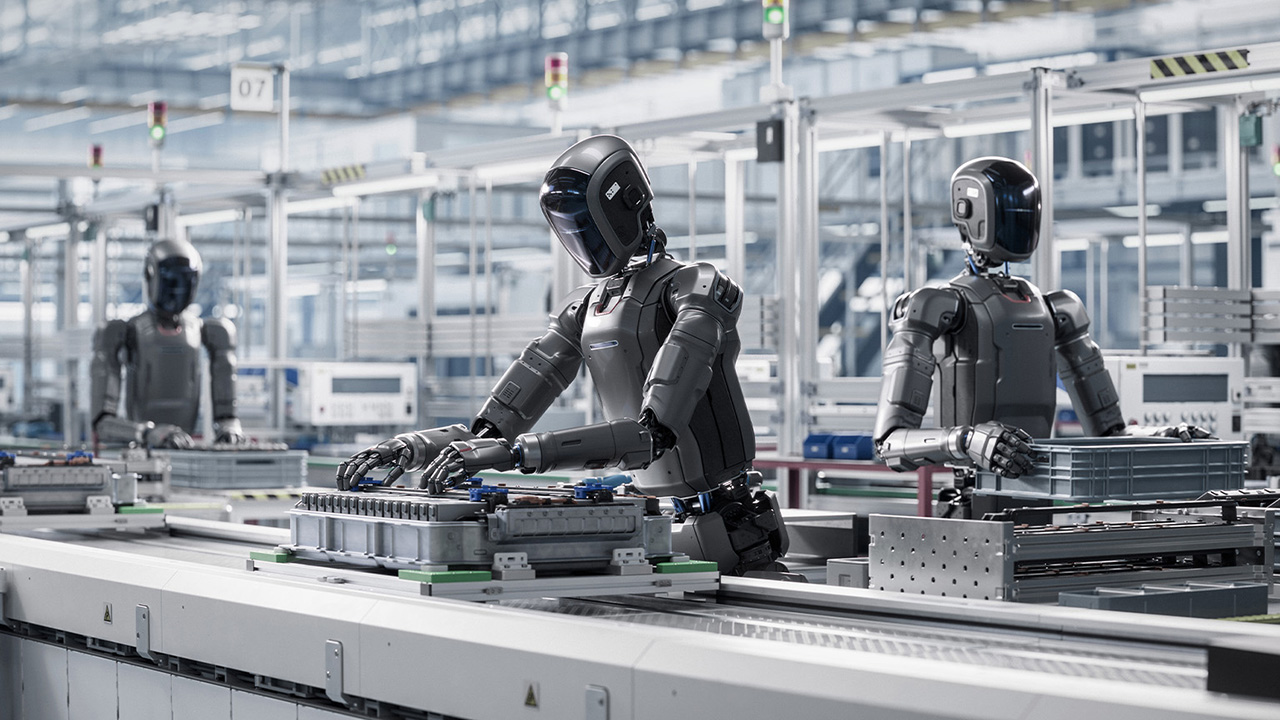
| The workforce of the future is often imagined as fleets of humanoid robots—machines that look and move like people—handling manufacturing, transportation, or other heavily manual tasks. But that is still a distant promise. “The prototypes that are capturing headlines are impressive but still far from delivering consistent, reliable, and economically justifiable performance in real-world settings,” say McKinsey’s Ani Kelkar, Christian Jansen, Frank Chu, Mark Patel, Michael Chui, Mikael Robertson, and Robert Hess. To close this gap, technology providers must build “bridges” in four areas: improving safety systems, delivering sustained uptime, achieving greater dexterity and mobility, and radically reducing costs. The authors say that progress in these areas will depend on more than technological advances and will require coordinated choices among developers, suppliers, end users, and investors. | | | Lead by teaming robots and people at work. | | | | | —Edited by Eric Quiñones, senior editor, New Jersey
| | |
|
Click to get this newsletter twice per month |
|
| | |
|
|
|
Copyright © 2026 | McKinsey & Company, 3 World Trade Center, 175 Greenwich Street, New York, NY 10007
|
|
|
|
|
|