| | | | | | |
Click to get this newsletter twice per month |
| |
|
| |
| | Brought to you by Alex Panas, global leader of industries, & Becca Coggins, global leader of functional practices and growth platforms
| | | | | | |
|
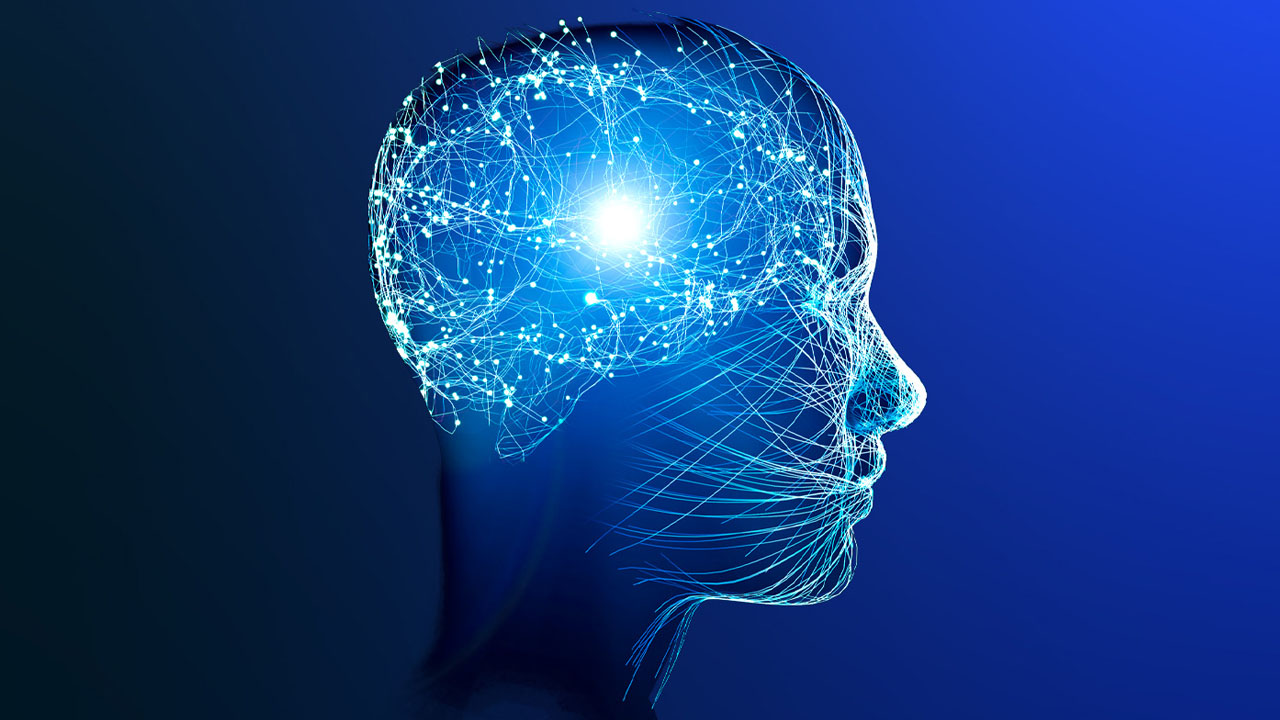
| | | | Organizations are investing heavily in AI to harness its potential to enhance productivity and fuel growth. But there’s a more organic source of value that’s equally important and often overlooked: the human brain. An emerging concept known as the brain economy asserts that in today’s tech-powered times, economic strength depends greatly on brain health and brain skills, together known as brain capital. This week, we look at how leaders can invest in brain capital to boost human health, company resilience, and economic growth. | | | |
| | | |
| | | In the AI age, organizations will create true competitive advantage if they can combine the power of machines with humans’ distinctive abilities to think clearly, collaborate, and exercise good judgment. McKinsey’s Erica Coe, Jacqueline Brassey, Kana Enomoto, Lucy Pérez, and their coauthors say that even as technology rapidly advances, “nothing yet replicates the brain’s capacity to contribute to society.” In a report from the McKinsey Health Institute (MHI), in collaboration with the World Economic Forum, they outline five levers to bolster the brain economy: safeguarding brain health by ensuring access to effective care; fostering brain skills for current and future workers and older individuals; expanding studies of brain capital; investing in products, services, and systems that improve brain capital; and forging a coordinated global movement to grow brain capital. “While the stakes are high if we fail to invest in the health of our brains and the skills that make us uniquely human, the potential gains—individually, socially, and economically—are even greater if we choose to do so,” the authors say. | | |
| | | | | | | That’s the amount of global GDP gains that, by 2050, could be generated by scaling brain health interventions, according to an analysis by MHI and the Clinton Health Access Initiative. The potential gains include $3.1 trillion from less time lost to sickness and disability, $1.7 trillion from higher engagement at work, and $712 billion from fewer early deaths, note McKinsey’s Brad Herbig, Erica Coe, Kana Enomoto, and Shekhar Saxena. These estimates reflect the impact of cost-effective interventions to prevent, treat, and help people recover from brain health conditions, including mental, neurological, and substance use disorders. | | |
| | | |
| | | “A healthier workforce is a more resilient and adaptive workforce, more capable of navigating the uncertainties and challenges of a rapidly changing world.” | | | That’s McKinsey’s Barbara Jeffery, Brooke Weddle, Jacqueline Brassey, and Shail Thaker on why employers should invest in holistic employee health, including mental, physical, spiritual, and social well-being. In an MHI survey of 30,000 employees worldwide, only 57 percent reported good holistic health. The authors observe that prioritizing health helps companies improve productivity, reduce absenteeism, decrease healthcare costs, and boost employee engagement and retention. MHI research suggests that improving employee health could generate between $3.7 trillion and $11.7 trillion in global economic value.
| | |
| | | |
| | | |
| Mental and substance use disorders tend to peak earlier in people’s lives and, when left untreated, can hinder their health, learning, and future livelihoods. This makes early diagnosis and intervention for such conditions essential, says Zeinab Hijazi, PsyD, the global lead on mental health at UNICEF. In an interview with McKinsey’s Erica Coe and Kana Enomoto, Dr. Hijazi says that multilateral organizations, UNICEF included, are working to incorporate mental health considerations into policymaking worldwide. She stresses that mental health is a universal human right but that care has long been stigmatized and underfunded, particularly for young people. “Think of it as a thread that runs through the fabric of all our social structures,” Dr. Hijazi says. “It affects not just their psychological well-being but also their learning, their development, and their capacity to connect and contribute to society.”
| | |
| | | |
| | | |
| In a world where people and machines increasingly work in partnership, uniquely human capabilities—our brain-powered “soft skills”—will become increasingly valuable. McKinsey Senior Partner Brooke Weddle says that as companies invest in enhancing their employees’ digital expertise, they must also help them strengthen human-centric skills such as critical thinking, empathy, and communication. AI’s potential to automate many routine tasks can free up employees to handle duties that require a more human touch and deliver personal attention to colleagues, customers, and other stakeholders. “AI advancements will continue to have wide-ranging effects on why and how companies enhance their upskilling efforts in the years to come,” Weddle says. “But as leaders sharpen their focus on the technology and its promise to boost productivity, they must still remember to put people first.” | | | Lead by investing in brain capital. | | | | | — Edited by Eric Quiñones, senior editor, New Jersey
| | |
|
Click to get this newsletter twice per month |
|
| | |
|
|
|
Copyright © 2025 | McKinsey & Company, 3 World Trade Center, 175 Greenwich Street, New York, NY 10007
|
|
|
|
|
|