| DELIVERING ON DIVERSITY, GENDER EQUALITY, AND INCLUSION
|
| Click to get this newsletter weekly |
|
|
| In this issue, we look at how people’s environments and social backgrounds shape the decisions they make about food and at the questions that more and more consumers are now asking when they buy a watch or fine jewelry. |
|
|
| Dr. Priya Fielding-Singh is the author of the new book How the Other Half Eats: The Untold Story of Food and Inequality in America. In a recent edition of McKinsey’s Author Talks, she discusses why widespread disparities in nutrition across race, ethnicity, and class can’t simply be chalked up to America’s “food deserts,” how ingrained beliefs about what makes a good mother shape women’s choices about what their children eat, and why she views inequality in the San Francisco Bay Area, the site of her research, as emblematic of trends across America. The sociologist and ethnographer also takes on food misconceptions, including that only low-income kids eat junk food. As Dr. Fielding-Singh explains, “All the high-income kids that I met in my study were also begging their parents for that food. Now, maybe they had learned that they should beg their parents for the Whole Foods version of that junk food. But they were still asking for chips, candy, and sugar-sweetened beverages.” Hear more from the author on parents’ shared food challenges—and how inequality manifests in what Americans eat.
|
|
| What does it take to make a high-end watch or a diamond ring? As McKinsey partner Alexander Thiel explains in the latest episode of the McKinsey on Consumer and Retail podcast, “Particularly when it comes to fine materials and fine metals—like gold, silver, and diamonds—the reality is that the standards for extraction today vary widely.” |
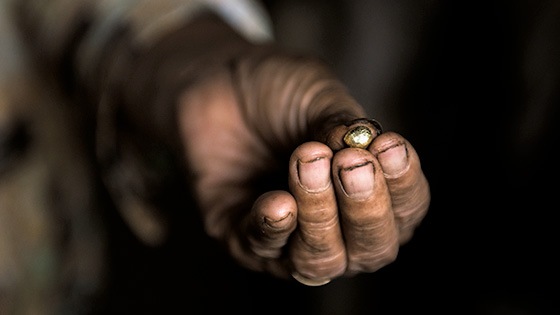
| The human and environmental costs can be high. Around the world, about 45 million people work in artisanal or small-scale mining, an often overlooked yet socially and economically important sector. According to the World Bank, artisanal and small-scale miners produce the majority of all sapphires, one-quarter of the world’s diamonds, and one-fifth of the world’s gold. Yet in certain regions, artisanal miners live in extreme poverty and work without job security in dangerous conditions that have worsened during the COVID-19 pandemic. Debt bondage (a form of modern slavery) and child labor persist. |
| The fine-jewelry industry has been slow to implement marketwide changes, but consumer tides—and executives’ mindsets—have begun to shift. Where did the precious materials come from? Who mined them, and under what conditions? How much waste was produced, and how much carbon was emitted? More and more consumers are asking these questions; McKinsey projects that by 2025, 20 to 30 percent of all fine-jewelry purchases will be influenced by such considerations. That’s at least triple the share from just three years ago. |
| Fine-jewelry and watch companies are turning their focus toward building a positive brand, not just mitigating risk—and executives are increasingly committing to tackling issues during their tenure. As McKinsey’s Tyler Harris puts it, “It’s really easy to say, ‘In 20 years, we want our company to achieve this goal,’ but you are de facto saying, ‘I’m going to make this the next leadership team’s problem to solve.’ The best brands set near-in targets that ladder up to the bigger goal and hold teams responsible now.” |
| Most companies aren’t making enough progress to achieve the transformational change that’s needed across the value chain. One way that companies can do better by miners and the climate: establish a chain of custody over fine materials. Most often, gold and diamonds can’t be traced back to the mine they came from or the miners who unearthed them. By documenting the supply chain from end to end, companies can trace materials back to the source—and demonstrate that their supply chains are ethical. |
| — Edited by Julia Arnous, an editor in McKinsey’s Boston office |
|
| Click to subscribe to this weekly newsletter |
|
|
|
Copyright © 2022 | McKinsey & Company, 3 World Trade Center, 175 Greenwich Street, New York, NY 10007
|
|
|
|