| DELIVERING ON DIVERSITY, GENDER EQUALITY, AND INCLUSION
|
| Click to get this newsletter weekly |
|
|
| In this issue, we look at the workers who won’t be on the runways during fashion month, and the kinds of stories Pose’s lead actress wants to see on TV. |
|
|
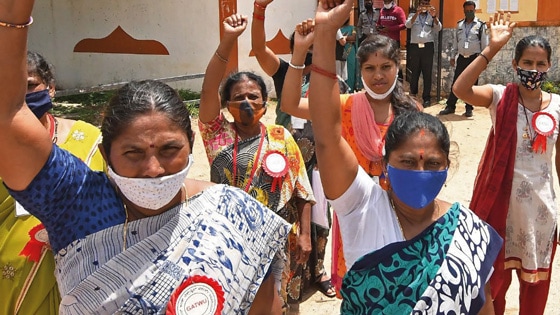
| This week, Milan; next week, Paris—September is fashion month, and models are taking to the catwalks in the world’s fashion capitals. Other workers remain out of view, including the 40 million to 60 million garment workers worldwide who have been affected by the COVID-19 pandemic. Even so, McKinsey research shows that the pandemic has amplified public awareness of social injustice in the supply chain—and more and more consumers are voicing concerns about labor violations and human-rights issues in the fashion industry. Last year saw widespread factory closures, order cancellations, payment delays, and supplier-contract renegotiations—and garment workers bore the brunt of the losses. The labor-rights activist Kalpona Akter, founder and executive director of the Bangladesh Center for Workers’ Solidarity, put the situation in clear terms: “Everyone in the supply chain needs to understand that all the cancellations … are put on the workers’ shoulders. Why is it always us who have to suffer, even in this pandemic?” |
| Since the start of the crisis, thousands of consumers worldwide have participated in the #PayUp campaign, which calls out brands that have not committed to pay for in-production or completed orders. While consumers’ purchasing decisions don’t always align with their stated values, many consumers say they’re ready to shift their buying behavior; in a 2020 McKinsey survey, two-thirds of consumers in Germany, Spain, and the UK said they would stop or significantly reduce shopping at a brand if they found it was not treating its employees or suppliers’ employees fairly. |
| As momentum for change builds alongside campaigns to end exploitation, consumers (and increasingly, investors) will expect companies to offer more dignity, security, and justice to workers throughout the global value chain—including in factories located far from the runways of London, Milan, New York, and Paris. On order: meaningful engagement with trade unions, and with workers directly. |
|
| Long before Sunday night’s Emmy Awards ceremony, the star of the FX drama Pose made history: in July, Michaela Jaé Rodriguez became the first transgender performer to be nominated for a Primetime Emmy in a lead-acting category. Rodriguez earned the best lead-actress nomination for her role as Blanca Evangelista, a house mother (the head of a chosen family) in the New York ballroom scene of the ’80s and ’90s. Like her character, Rodriguez is Afro-Latina; Pose stands out for centering the experiences of LGBTQ+ people of color, and for the diversity of its cast. McKinsey research shows that while audience demand for shows with diverse casts has rapidly increased in recent years, less than 5 percent of US streaming shows have Black leads—and Black professionals face barriers and inequities throughout the film and TV industry.
|
| Since the start of her career, Rodriguez has experienced heightened challenges as a transgender, Afro-Latina woman. “As much as I felt I was making strides,” she says, “there were still those three identities that were holding me back from making it into a space I had always dreamed of being.” Before Pose, the actress was “systematically being placed in a box.” As Rodriguez points out, the series “[told] stories that had never been told before to mainstream audiences.” Rodriguez wants to see more—and more diverse—Black and Latinx representation, both behind and in front of the camera. “I want to see some Latina, disabled, LGBTQAI members on the television screen,” she says. “Show shows that talk about stories like that.”
|
| — Edited by Gwyn Herbein, an assistant managing editor in McKinsey’s Atlanta office |
|
| Click to subscribe to this weekly newsletter |
|
|
Did you enjoy this newsletter? Forward it to colleagues and friends so they can subscribe too.
Was this issue forwarded to you? Sign up for it and sample our 40+ other free email subscriptions here.
|
|
|
Copyright © 2021 | McKinsey & Company, 3 World Trade Center, 175 Greenwich Street, New York, NY 10007
|
|
|
|