| DELIVERING ON DIVERSITY, GENDER EQUALITY, AND INCLUSION
|
| Click to get this newsletter weekly |
|
|
| In this issue, we reflect on the girls missing from South Asia’s classrooms and on Haiti’s rural–urban divide. |
|
| Over the past few years, gender gaps in education have been narrowing in many countries—but girls and women continue to face barriers to attending school and university. Overall, from 2014 to 2019 there was no global progress toward parity in educational attainment. Women make up two-thirds of all illiterate adults, and in the world as a whole about 195 million more adult women than men are illiterate. South Asia is among the regions with the greatest educational inequality; McKinsey research shows that in many South Asian countries, women attain only 75 to 80 percent of the educational levels that men do. |
| In fact, overall gender inequality is higher in South Asia (excluding India) than in any other region. That means South Asian countries have even more to gain from advancing equality: McKinsey analysis shows that bridging the gender gap could increase the region’s annual GDP in 2025 by nearly 50 percent. |
| Of course, this is a moral issue as well as an economic one. In countries closer to gender parity in education, child marriage and violence against women are less prevalent, and reproductive and maternal health have improved. (Nearly 30 percent of young women in South Asia were married before the age of 18.) School is a place where girls can learn about their rights, their autonomy, and their health (including family planning) and where issues such as sex-selective abortion can be broached and confronted. |
| As McKinsey Global Institute partner Anu Madgavkar puts it, “Gender equality is about attitudes that have been centuries in the making and are pervasive at the microlevel in the home.” Getting girls into classrooms and women onto campuses will require shifts in these deep-rooted attitudes—among women and girls, as well as community elders, men, and boys. |
|
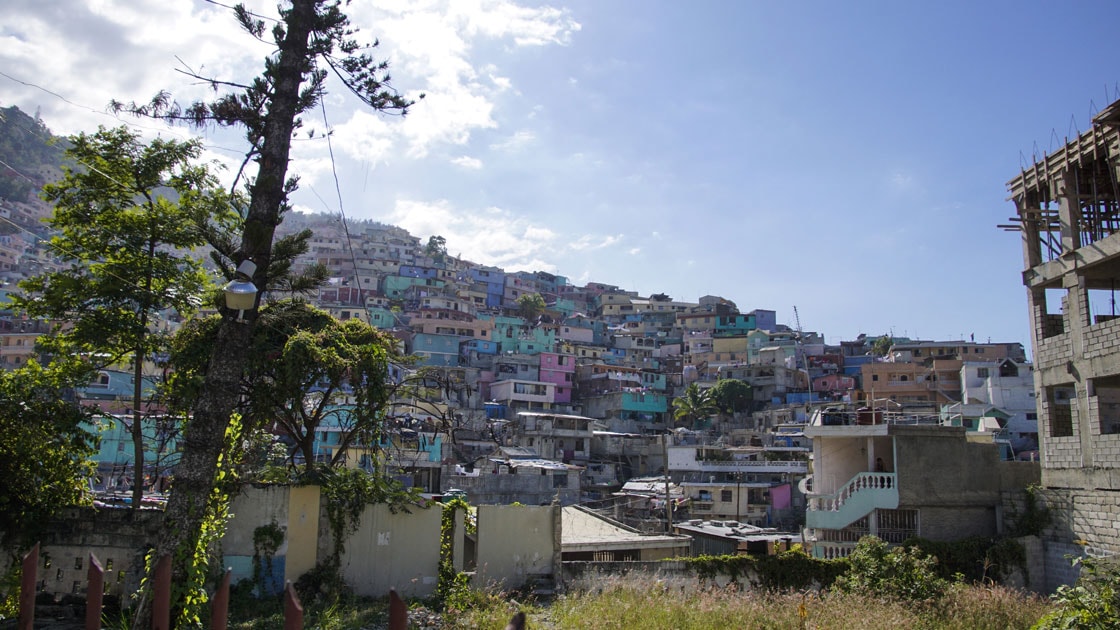
| In addition to the devastating human toll, the earthquake that struck Haiti on Saturday caused significant power outages—and even before this disaster, many Haitians were without power. Only 45 percent of the population had access to electricity, but in some sense this figure fails to reflect the full scope of the problem. The country faces a striking rural–urban divide: according to the World Bank, just 1 percent of the rural population has access to electricity, compared with 80 percent of city dwellers. (Pictured above: the capital, Port-au-Prince, which was largely spared during the latest earthquake, though residents felt the tremor.)
|
|
| Click to subscribe to this weekly newsletter |
|
|
Did you enjoy this newsletter? Forward it to colleagues and friends so they can subscribe too.
Was this issue forwarded to you? Sign up for it and sample our 40+ other free email subscriptions here.
|
|
|
Copyright © 2021 | McKinsey & Company, 3 World Trade Center, 175 Greenwich Street, New York, NY 10007
|
|
|