| DELIVERING ON DIVERSITY, GENDER EQUALITY, AND INCLUSION
|
| Click to get this newsletter weekly |
|
|
| In this issue, we look at a trailblazing move by Ally Bank, what contract workers are looking for, and what makes the Netflix series High on the Hog special. Plus: how Vimeo CEO Anjali Sud is encouraging everyone at the company to disagree with their boss. |
|
|
|
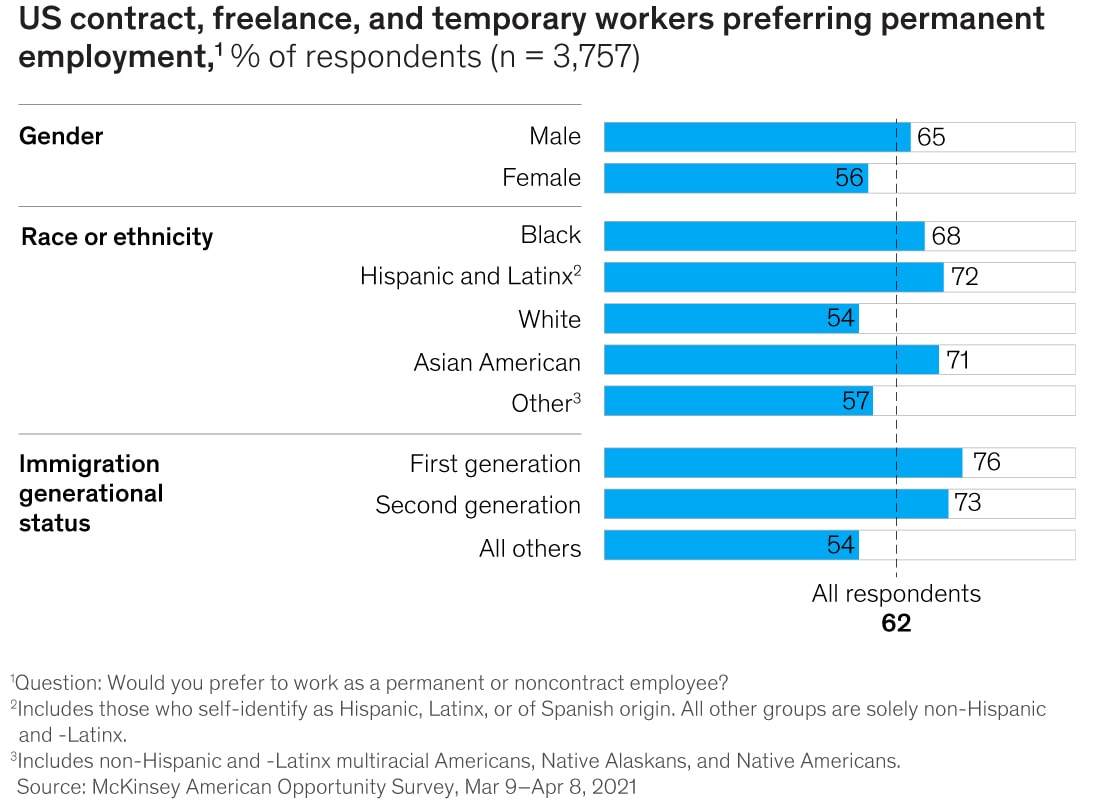
Nonpermanent workers account for a sizable share of the US workforce: in a recent McKinsey survey, more than one in four working Americans said they were a contract, freelance, or temporary worker. Black, Hispanic, and Latinx Americans are overrepresented among nonpermanent workers, as are first- and second-generation immigrants. But three-fourths of immigrants with nonpermanent jobs would prefer permanent work—as would the majority of Black, Hispanic, Latinx, and Asian American nonpermanent workers. In fact, most contract, freelance, and temporary workers would prefer permanent employment. On the other hand, most of the executives McKinsey surveyed last summer said that they expected to see more of these workers at their company or in their business area. |
|
| In a recent essay, “The profound significance of ‘High on the Hog,’” Osayi Endolyn reflects on the new Netflix series hosted by fellow food writer Stephen Satterfield. High on the Hog’s directors, executive producers, and showrunner (series producer) are Black, as are its host and the historian whose book inspired the show. This sets the series apart, given that Black talent is underrepresented across the film and TV industry. A case in point: according to McKinsey research, only 5 percent of the showrunners of US-produced shows are Black. As Satterfield points out, “Oftentimes when our shows get made, when our stories get told, when our food gets talked about, it’s the ‘hardship’ story.” For both the show’s host and the essay’s author, High on the Hog is about joy and celebration. Its release, Endolyn says, is momentous because “at the center of the series is the holistic experience of Black foodways, told for us, by us: our unique and complex migration, diverse customs, creativity and expertise on full display.”
|
|
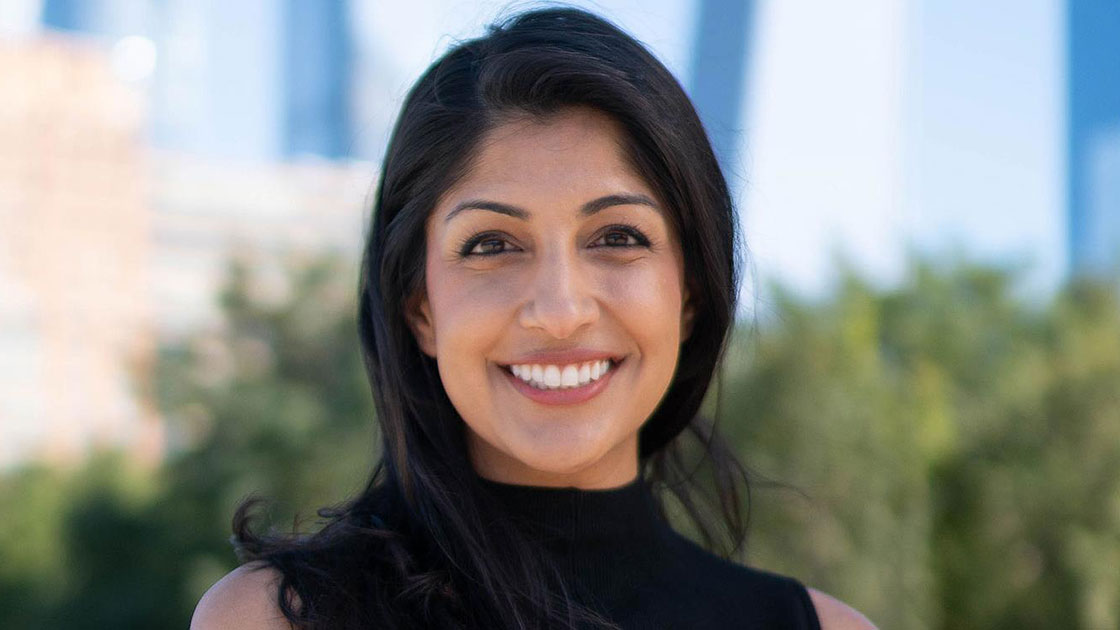
| Anjali Sud is the CEO of Vimeo, and last month she took the company public. Investors tapped Sud to lead the online video platform in 2017, after she created an incubator within Vimeo and launched a breakout product—Vimeo Business—in the space of a year. Sud reflected on Vimeo’s culture and her experience reinventing the company’s business model in Inside the Strategy Room, a McKinsey podcast. As a leader, Sud wants to be challenged, and she’s surrounded herself with a team of executives who are willing to disagree with her. Sud says that’s key—“because when you are on a video call and you see your boss challenge their boss, you are more likely to then challenge your own boss.” Leaders, she says, need to back up the claim that they encourage dissent: “You have to be comfortable with people openly challenging what you say. You need to be the type of leader to genuinely encourage it and not get defensive, and that is really hard to do.” |
| — Edited by Gwyn Herbein, an assistant managing editor in McKinsey’s Atlanta office |
|
| Click to subscribe to this weekly newsletter |
|
|
Did you enjoy this newsletter? Forward it to colleagues and friends so they can subscribe too.
Was this issue forwarded to you? Sign up for it and sample our 40+ other free email subscriptions here.
|
|
|
Copyright © 2021 | McKinsey & Company, 3 World Trade Center, 175 Greenwich Street, New York, NY 10007
|
|
|
|