Be so for real?

|  | | | | |
| Click to get this newsletter monthly |
| |
|
|
| | Brought to you by Alex Panas, global leader of industries, & Becca Coggins, global leader of functional practices and growth platforms
| | | | | | |
|
| | | | |
| | | |
| Every year on the fourth Thursday of April, corporate offices across the United States fill with children shadowing their parents. The tradition dates to the 1990s, when Gloria Steinem helped champion what is now Take Our Daughters and Sons to Work Day—an effort to give young people a glimpse of what their future professional lives could look like.
Three decades on, those kids—now Gen Zers—are entering the workforce with a different script: “Bring your whole self to work.” The directive, shaped by decades of psychology and repackaged in the 2010s and 2020s by corporate America as a mantra of authenticity and inclusion, means to show up in professional settings without filtering one’s identity, values, or personality to fit traditional office norms. In many cases, it has become corporate gospel.
Whether it reflects how people work now—or how they should—is less clear.
That tension is at the center of a recent McKinsey Talks Talent podcast episode, where McKinsey Senior Partner Brooke Weddle and Partner Bryan Hancock unpack the idea with organizational psychologist Tomas Chamorro-Premuzic.
The whole-self concept started with a clear goal: to make workplaces more inclusive. Encouraging people to “be themselves” was meant to signal that success didn’t require conforming to a single corporate norm. It was also, in part, a response to the very real ways those norms had excluded people—penalizing everything from natural hair to cultural expression under the guise of “professionalism.” For Gen Zers, that message would presumably land: They value authenticity in the workplace and expect alignment between their personal values and their employers’ actions.
In practice, the picture is more complicated. Many Gen Z employees hold back at work: 68 percent said they hide parts of themselves in their jobs, compared with 52 percent of baby boomers, according to one recent survey.
Part of the disconnect comes down to definition. If authenticity means showing up exactly as you are, regardless of context, it can quickly backfire. As Chamorro-Premuzic puts it, work is not a stage to display your whole self—but your best professional self.
That shift has practical implications. Adaptability is one of the strongest predictors of leadership effectiveness. Being able to read a situation, take in feedback, and adjust behavior accordingly matters. Emotional intelligence, not self-expression alone, is what builds trust and drives performance.
The pitfalls are familiar. “Brutal honesty” can erode trust. Dismissing others’ perspectives cuts off the feedback that can make collaboration and improvement possible. True self-awareness encompasses an awareness of others too: how they—and you—operate in a particular environment.
So, what does this mean for Gen Z?
Start by reframing authenticity. It’s less about full transparency and more about consistency—between what you value and how you show up in ways that serve the team. Next, build the ability to adapt. The most effective employees treat feedback as data, not a threat to identity. Third, focus on what Chamorro-Premuzic calls “organizational citizenship.” Being reliable, collaborative, and considerate of others tends to go further than expressing every hot take. And pay attention to reputation. Careers are shaped less by how authentic we feel and more by how others experience us. That makes external feedback essential.
None of this means abandoning authenticity, but using it with more intention. The question isn’t whether to be yourself at work. It’s which version of yourself the moment demands—and whether you’re willing to meet it.
| | | |
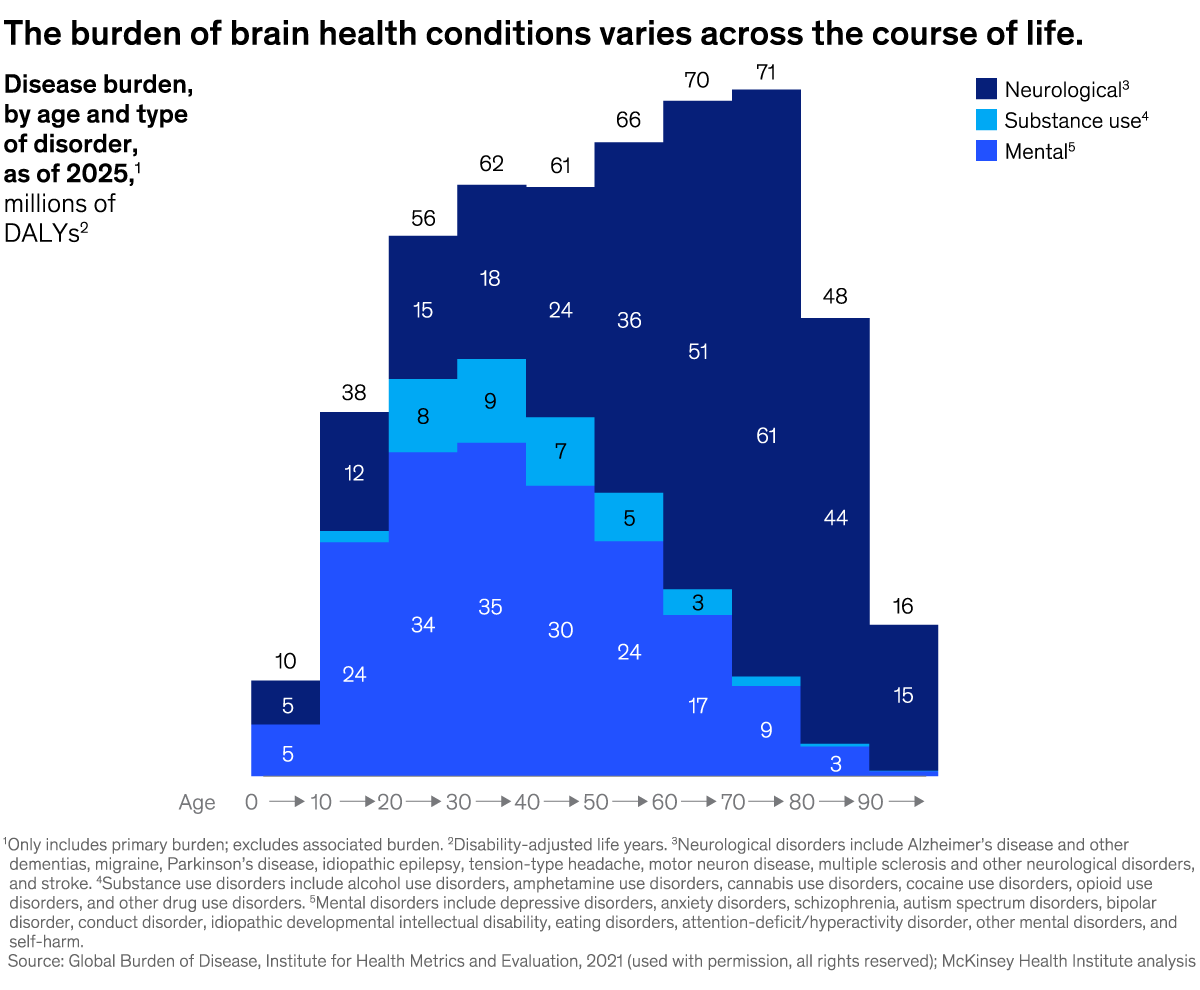
| | | People under the age of 30 see higher mental health disease burdens, while older people see higher rates of neurological diseases.
| | | | | |
| | | | | |
| | | Coach me if you can. Young people have spent more time in digital learning and digital professional environments, which in many cases affects their confidence in public speaking. Can AI help? | | | | | Lilly lead better. To the future CEOs reading this, especially women: Think like the top exec long before you have the role, advises one leader. | | |
| | | |
| | | Reading for pleasure. If the news article looks too long, younger audiences may already be scrolling past it. [Neiman Lab]
| | | The puck stops here. Inside the Gen Z takeover of the NHL. [NYT]
| | |
|
—Edited by Alexandra Mondalek, editor, New York
| | |
|
| Click to get this newsletter monthly |
| |
|
| | Have feedback or other ideas? We’d love to hear from you. | | | | |
|
| | |
| |
|
|
|
Copyright © 2026 | McKinsey & Company, 3 World Trade Center, 175 Greenwich Street, New York, NY 10007
|
|
|
|
|