| DELIVERING ON DIVERSITY, GENDER EQUALITY, AND INCLUSION
|
| Click to get this newsletter weekly |
|
|
| In this issue, we look at how ageism is affecting workers and constraining global growth. We also consider the lack of supermarkets in many Black communities in the United States—and why one city has vegetables in its transit stations. |
|
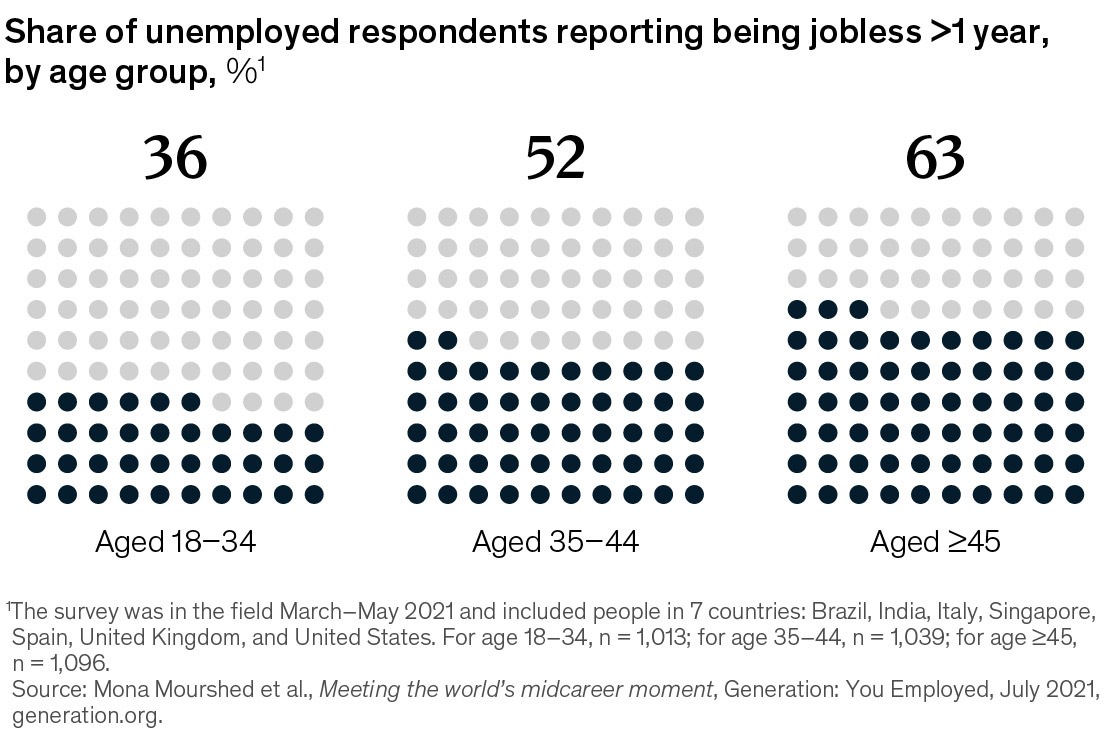
| People in their forties and fifties are having a harder time finding work. In countries as diverse as Brazil, India, Singapore, and Spain, those between the ages of 45 and 60 are spending far more time unemployed than their younger counterparts. The numbers are stark: in a recent survey by the nonprofit Generation (which was founded by McKinsey), nearly two-thirds of unemployed respondents aged 45 and up said they’d been out of work for more than a year. Only about half of unemployed respondents aged between 35 and 44 said they had been job hunting for that long; those younger than 35 had spent fewer months without work. |
| Why aren’t companies snapping up more seasoned workers? The research points to age discrimination. In seven countries across four continents, less than one-fifth of hiring managers said they thought older workers had the best experience (based on education, prior work, and technical skills). Just 15 percent said that workers 45 and up were the best fit for their organization. These views were not borne out by the facts; the same managers said that almost 90 percent of hires aged 45 and up outperformed or kept pace with their younger colleagues. |
| By closing the door to older workers—including those over 60—organizations are missing out on key talent and limiting global prosperity. In fact, McKinsey research shows that expanding labor-force participation among people in their sixties who want to work for longer could add $2.4 trillion to global GDP by 2040. What would it take to realize this growth potential? Training programs, more flexible and age-sensitive company policies, and—you guessed it—an end to age discrimination. |
|
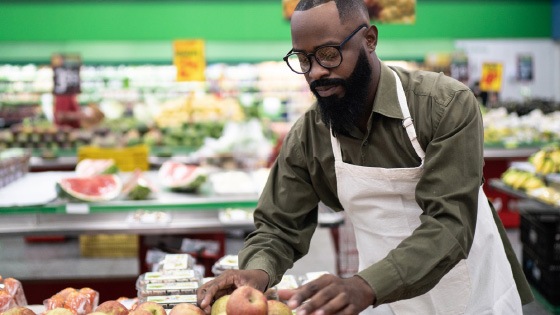
| Most Americans take for granted the convenience of a neighborhood supermarket with a dozen well-stocked aisles. But in many Black communities—both urban and rural—the absence of supermarkets means that food is more expensive, choice is limited, and fresh produce is hard to come by. McKinsey analysis shows that one in five Black Americans lives in a low-income neighborhood with limited access to healthy, affordable food. (This is what the USDA once called a “food desert”; some scholars and activists advocate the use of other terms that highlight structural inequities and reflect the vibrancy of low-income communities.) Of the more than 8 million Black Americans who don’t have easy access to fresh food, 40 percent are concentrated in five states in the South: Florida, Georgia, Louisiana, Mississippi, and Texas.
|
| Grassroots initiatives in these and other states offer promising models for how to boost food access. In Atlanta, for example, residents of low-income neighborhoods can buy fruits and vegetables at the Fresh MARTA Market, which operates at five local transit stations on different days of the week. It’s a simple idea and an urgent endeavor: “help get healthy, fresh food into places where people already are.” |
| — Edited by Gwyn Herbein, an assistant managing editor in McKinsey’s Atlanta office |
|
| Click to subscribe to this weekly newsletter |
|
|
Did you enjoy this newsletter? Forward it to colleagues and friends so they can subscribe too.
Was this issue forwarded to you? Sign up for it and sample our 40+ other free email subscriptions here.
|
|
|
Copyright © 2021 | McKinsey & Company, 3 World Trade Center, 175 Greenwich Street, New York, NY 10007
|
|
|