McKinsey & Company
Share this email LinkedIn Twitter Facebook
Intersection
DELIVERING ON DIVERSITY, GENDER EQUALITY, AND INCLUSION
Subscribe
Click to get this newsletter weekly
In this issue, we look at the challenges facing Black business owners in the US and reflect on the upcoming Juneteenth holiday.
THE FACTS
An unequal path to recovery
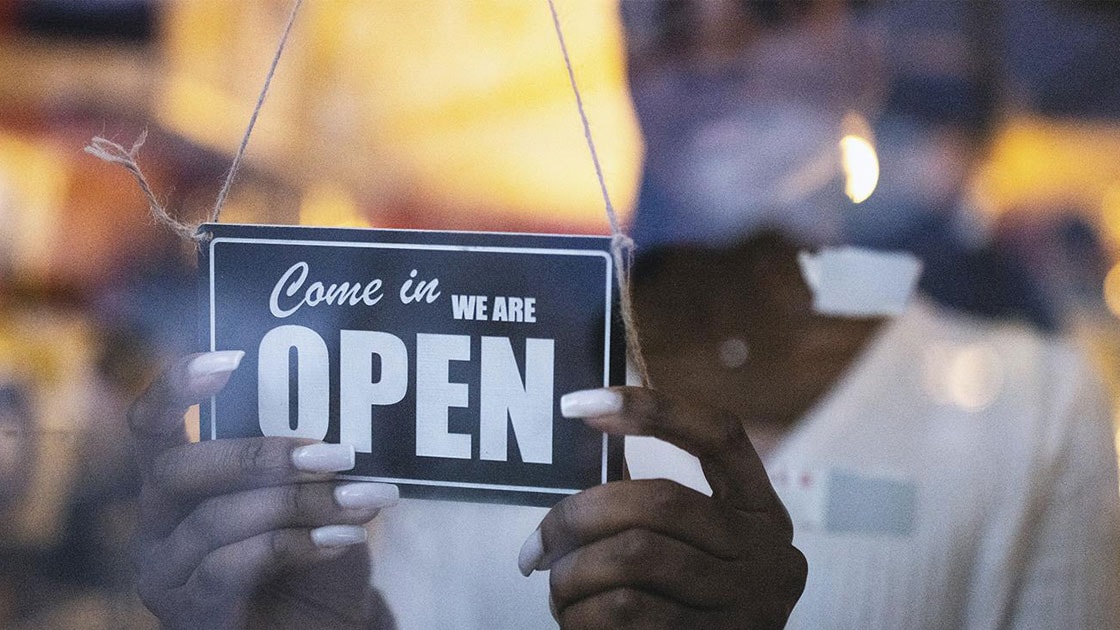
person putting an open store sign
Before the start of the pandemic, Black-owned businesses employed well over one million Americans and contributed nearly $200 billion to US GDP each year. But these businesses entered the pandemic on unequal footing—and the economic fallout has exacerbated existing inequities. Despite surges in sales following the murder of George Floyd, 85 percent of Black-owned small businesses with employees lost revenue last year, compared with three-quarters of white-owned businesses.
Business owners’ personal finances have also taken a hit. More than 90 percent of Black-owned small businesses with employees have faced financial challenges during the pandemic, and three in four of these businesses’ owners have used personal funds to shore up their businesses. In a fall survey by the Federal Reserve Banks, almost half of Black employers said they were worried about their personal credit score—or the loss of personal assets—due to late payments. The effects extend across these entrepreneurs’ personal networks: nearly 40 percent said they had borrowed money from family members or friends to help weather the pandemic.
Black-owned businesses need greater access to capital, both now and in the long run. This includes businesses without employees, which account for the vast majority of Black-owned businesses. Among other measures, large companies can offer emergency grants to support struggling small businesses—and banks can reassess their lending standards and work to eliminate racial bias within the loan process.
THE DATE
June 19, 1865
It was on that day that enslaved people in Galveston, Texas, received news of emancipation, more than two years after the issuance of the Emancipation Proclamation. Today, this is what Juneteenth looks like in America. Those looking to learn more might start with On Juneteenth, a short work by the historian Dr. Annette Gordon-Reed (herself from Texas).
Many companies will commemorate the holiday this week. Others have some way to go: in a recent McKinsey survey, nearly half of Black Americans reported that their company does not regularly recognize the traditions and holidays of a diverse set of employees.
In addition to marking Juneteenth, companies are called upon to deliver meaningful, systemic change.
— Edited by Julia Arnous, an editor in McKinsey’s Boston office
Subscribe
Click to subscribe to this weekly newsletter
McKinsey & Company
Follow our thinking
LinkedIn Twitter Facebook
Share these insights
Did you enjoy this newsletter? Forward it to colleagues and friends so they can subscribe too.
Was this issue forwarded to you? Sign up for it and sample our 40+ other free email subscriptions here.
Copyright © 2021 | McKinsey & Company, 3 World Trade Center, 175 Greenwich Street, New York, NY 10007