| DELIVERING ON DIVERSITY, GENDER EQUALITY, AND INCLUSION
|
| Click to get this newsletter weekly |
|
|
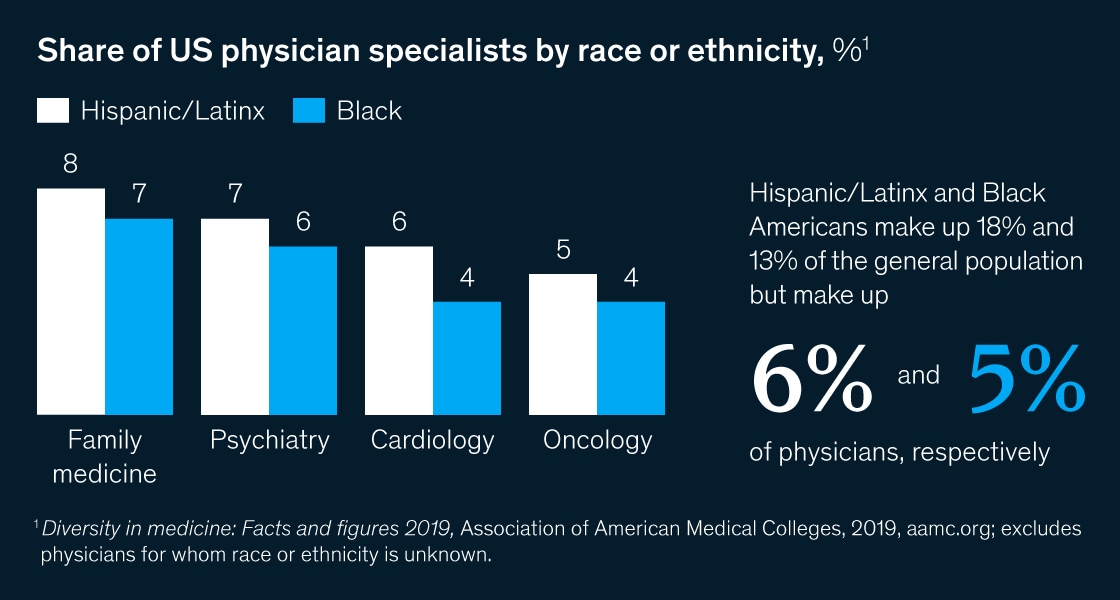
| In this issue, we focus on health: the first out transgender official confirmed by the US Senate, a groundbreaking New Zealand law on paid leave following miscarriage, the lack of diversity among US doctors, and unmet contraception needs in Africa. |
|
| • |
On their shoulders. Dr. Rachel Levine is the first out transgender person to serve in a US Senate-confirmed position. Upon her confirmation last week as assistant secretary for health, Dr. Levine thanked the LGBTQ+ community including “those whose names we will never know because they were forced to live and work in the shadows.” McKinsey research shows that more than one in four LGBTQ+ employees worldwide are not broadly out at work—and company policies can make life harder. Organizations can support LGBTQ+ employees in a number of ways, including by providing gender-neutral restrooms, trans-inclusive healthcare coverage, and medical leave for employees who are transitioning. |
|
| How can we measure gender equality? One way is to look at access to essential services that can boost economic opportunity. Among them: family planning. Worldwide, more than one in five women who want to avoid or postpone pregnancy are using a traditional method of contraception (such as withdrawal, abstinence, or fertility awareness-based methods) or no method at all. |
| African women in particular face high unmet family-planning needs; in sub-Saharan Africa, only about half of women who want to avoid pregnancy are using modern contraceptives, according to the United Nations. Adolescents and young women between the ages of 15 and 24 are in critical need of sexual and reproductive healthcare. Compared with other age groups, they have a harder time gaining access to contraceptives, and even getting information about them. One reason for this is stigma—both toward those who are unmarried and sexually active, and toward those who are married and don't want to get pregnant. |
| Global progress toward gender equality has been marginal since 2015, but McKinsey research shows that if action is taken to advance gender equality now—not just once the crisis has subsided—$12 trillion could be added to global GDP in 2030. Making sure that women and adolescent girls have access to contraceptives is key to their health—and to global economic progress. |
| — Edited by Julia Arnous, an editor in McKinsey's Boston office |
|
| Click to subscribe to this weekly newsletter |
|
|
Did you enjoy this newsletter? Forward it to colleagues and friends so they can subscribe too.
Was this issue forwarded to you? Sign up for it and sample our 40+ other free email subscriptions here.
|
|
|
Copyright © 2021 | McKinsey & Company, 3 World Trade Center, 175 Greenwich Street, New York, NY 10007
|
|
|