McKinsey partnered with Opportunity@Work (O@W), a national nonprofit reshaping the U.S. labor market, to scale skills-based hiring practices. Together, we created strategies, tools, and campaigns to help employers prioritize skills over degrees, enabling millions of workers to access higher-wage roles while building stronger, more diverse talent pipelines for employers.
WHAT WE ACHIEVED TOGETHER
HOW WE DID IT

Tear the Paper Ceiling campaign: Co-launched to help employers replace degree requirements with skills-based criteria

Digital portal: Developed to enable employers to explore STARs data, identify eligible roles, and access a diverse talent pipeline

STARs fund: Created messaging and communications for a $100 million campaign to grow O@W’s capabilities and network by 2028

Five-year strategy: Redefined O@W’s operating model, crafting a strategy and pinpointing critical initiatives and cross-unit synergies

Open-source playbooks: Captured best practices to support US states in removing degree screens for public-sector roles
The Impact
Ensuring skills-based hiring quality
O@W’s initiatives are unlocking an overlooked talent pool in the American workforce, leading to significant economic and social benefits.
Data-driven insights
Leveraging data to identify eligible roles, access a diverse talent pipeline, and continuously improve hiring practices
Employer support
Providing employers with the necessary tools and resources to adopt and sustain skills-based hiring practices, including digital portals, playbooks, and training programs
Quality of skills assessment
Implementing a consistent approach to evaluating candidates’ skills through practical assessments and real-world tasks, ensuring they meet job requirements
Scalability and sustainability
Developing strategies and frameworks that enable the widespread adoption of skills-based hiring across various sectors, ensuring long-term impact and sustainability
State-level success stories
Colorado
McKinsey and O@W partnered with Colorado’s Department of Personnel and Administration on an eight-week pilot to identify, test, and scale effective skills-based hiring practices. The team mapped the STARs applicant journey, trained HR teams, and rewrote job descriptions to highlight required skills. These efforts resulted in a significant increase in skills-based job postings and hires.
Utah
In partnership with McKinsey, O@W launched a pilot in Utah to strengthen communications, provide tool kits, and embed processes that help hiring teams apply skills-first practices more effectively. The state also created a website to highlight skills-based hiring, pathways into public service, and success stories.
LEARN MORE

Case Study
Unlocking career paths for workers through skills-first hiring
Partnering with Opportunity@Work to access to higher-wage careers for more workers

Blog Post
Opportunity@Work and McKinsey expand partnership to Colorado and Utah
-
Our organizations are helping employers shift to skills-based practices in hiring, which could enable upward mobility for 1 million workers in the U.S.
RELATED IMPACT STORIES

Expanding economic mobility with the Rework America Alliance
McKinsey joined Rework America Alliance to upskill and coach the low-wage workers most impacted by the COVID-19 pandemic ], and to shift employer practices to open opportunities for these workers based on their skills. The Rework America Alliance, a Markle Foundation initiative, is working to help millions of unemployed workers from low-wage roles move into better jobs.

Creating a more inclusive economy with the McKinsey Institute for Black Economic Mobility
The McKinsey Institute for Black Economic Mobility (BEM) is a think-and-do tank dedicated to advancing racial equity and inclusive growth through in-depth research and tools that enable organizations to accelerate real world impact.
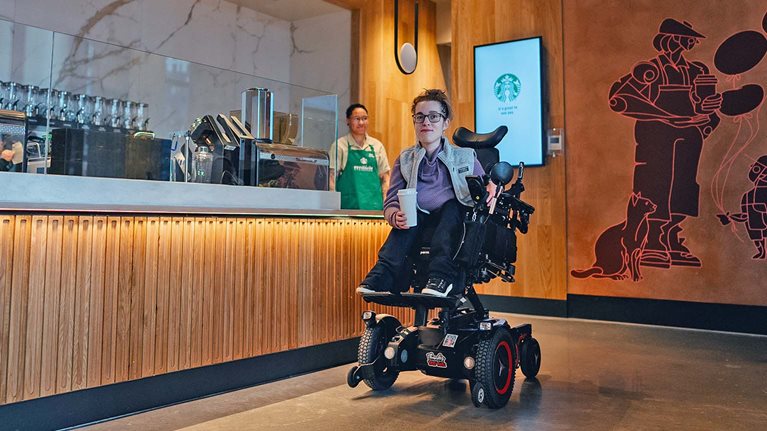
Helping Starbucks design stores that are inclusive for all
In 2021, Starbucks began working with McKinsey to develop elements of inclusive store design to reduce friction for those with disabilities. In 2024, Starbucks opened its first retail space designed using the Inclusive Spaces Framework in Washington, DC. It now plans to scale the design efforts across more stores to continue to create spaces that make everyone feel welcome.