UK companies with 250 or more employees are legally required to calculate and report their gender pay gap figures and this is the ninth year of mandatory reporting. Our data covers all UK employees of McKinsey & Company, including Partners and Senior Partners.
The gender pay gap is the difference in the average hourly wage of all men and women across a workforce. It is not the same as unequal pay (paying men and women differently for performing the same work). Within our firm, men and women with the same performance and experience in equivalent roles are paid equally.
2025 figures
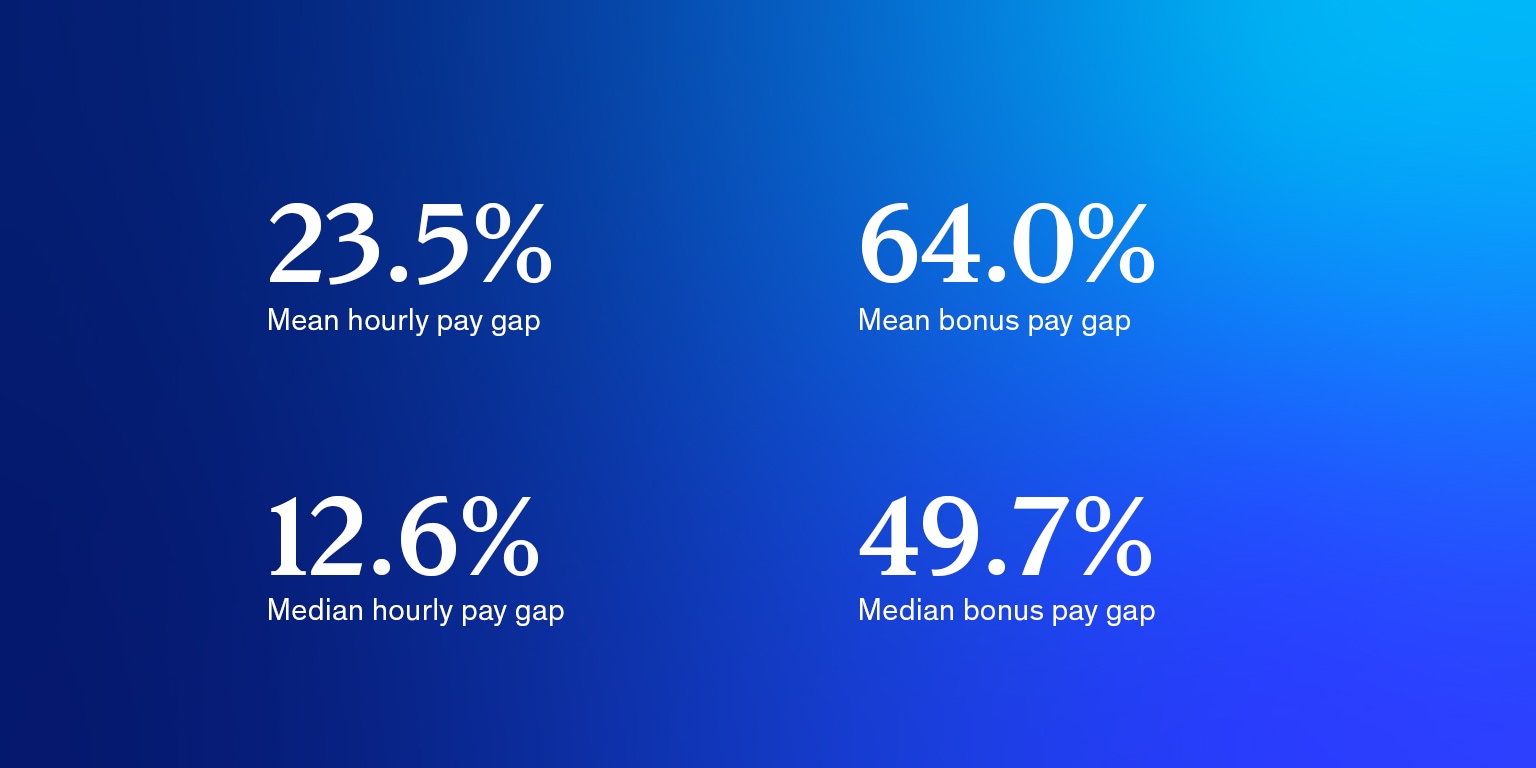
This year the mean hourly pay gap was 23.5%, 0.7% higher than in 2024. The median hourly pay gap was 12.6%, an increase of 3.0% compared to last year.
2025 pay quartiles
| Quartile | Male | Female |
| Upper | 70.3% | 29.7% |
| Upper middle | 52.6% | 47.4% |
| Lower middle | 47.0% | 53.0% |
| Lower | 36.4% | 63.6% |
Proportion of employees who received bonus pay:
Male 89.5% (94.0% in 2024)
Female 89.4% (93.6% in 2024)
Looking ahead
Closing the gender pay gap is a gradual, but essential, process, and achieving gender parity remains one of our top priorities. We’ve laid a solid foundation but recognise there’s still more to do. We are dedicated to the development and retention of talented women and continue to push for gender parity by using data-driven approaches and programmes that are focused on key career stages for women, supporting new parents with a programme designed to help them transition smoothly back to work after parental leave, and increasing awareness and support for perimenopause and menopause in the workplace. Additionally, through our affinity networks and communities, we are sharing experiences and lessons that help every member of our diverse community of women to thrive.
I confirm the data reported is accurate.
Gareth L Jones
(Director of People, UK, Ireland and Israel)
