


The supply chain is one of the largest controllable cost centers for hospitals. AI, including gen AI, can help procurement leaders accelerate sourcing cycles, uncover actionable insights across spending and utilization, and make data-driven decisions that improve cost, availability, and resilience.
About the survey
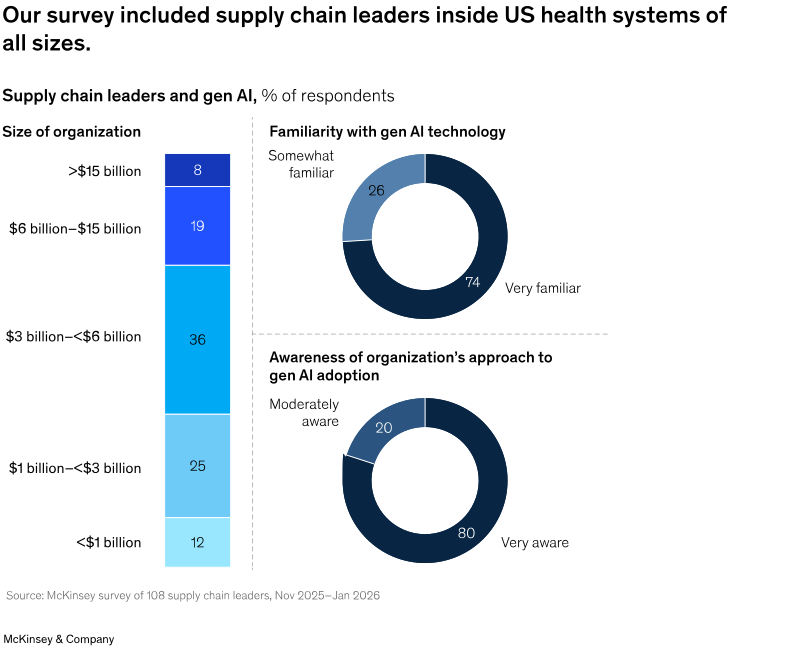
Between November 2025 and January 2026, McKinsey electronically surveyed 108 hospital supply chain leaders about AI adoption in the procurement function. Each leader represented a different health system across the United States. Our survey included predominantly executives or vice presidents of supply chain (64 percent), with the remainder of respondents serving as directors or managers in supply chain (36 percent). These leaders represent a range of health system sizes and were all aware of gen AI tools and their organization’s current approach to them (exhibit).
The goal of the survey was to assess current levels of adoption, prioritized use cases, potential barriers for adopting at scale, and the ROI that leaders have experienced so far.
Early applications are proving promising. A recent McKinsey survey gathered insights from more than 100 US health system supply chain leaders and found that, with the adoption of AI, leaders anticipate they could reduce supply costs by at least 5 to 10 percent in their organizations over the next three years (see sidebar, “About the survey”). This article reviews the applications of AI across hospital procurement operations that can revolutionize supply chain functions, the investments health systems are making today, and where leaders expect the most impact from AI to be in the future.
Supply chains are ripe for AI-integrated solutions
Supply chains are factual, document-heavy, and data-rich systems, making them a natural fit for AI. Across the end-to-end health system supply chain, AI can rapidly analyze large volumes of structured and unstructured data faster than traditional methods can. Health systems have been embracing AI adoption to help with procure-to-pay processes, to make faster sourcing decisions, and to improve supplier relationships.
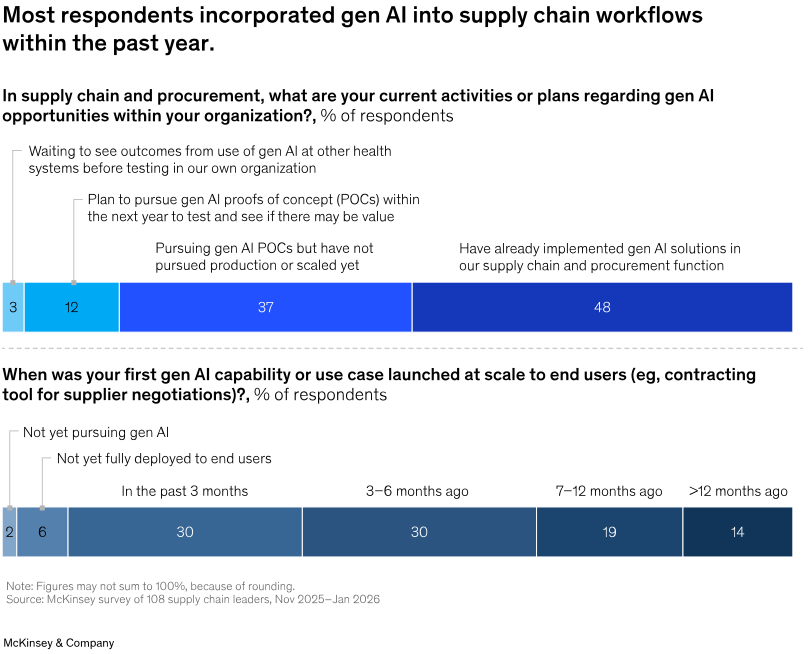
Our survey found that approximately 85 percent of respondents say their organizations are already pursuing AI, and 79 percent of respondents said this adoption occurred in the past 12 months (Exhibit 1).
Surveyed leaders believe AI can improve personalization and transparency across facets in three major areas (Exhibit 2):
- Supplier performance management and transparency. Gen AI helps identify new suppliers and aids in surfacing key insights to manage supplier performance, cost, and compliance. It can also field alternative materials and compare prices to find better supplier options.
- Predictive demand planning. Gen AI can assist with demand forecasting based on historical and projected patient volumes using advanced predictive analytics and current inventory and shipment times.
- Inventory management. AI can assess risk and anticipate stock-outs and supply chain delays. It can also suggest optimal periodic automatic replenishment levels, which reduces waste from expired items.
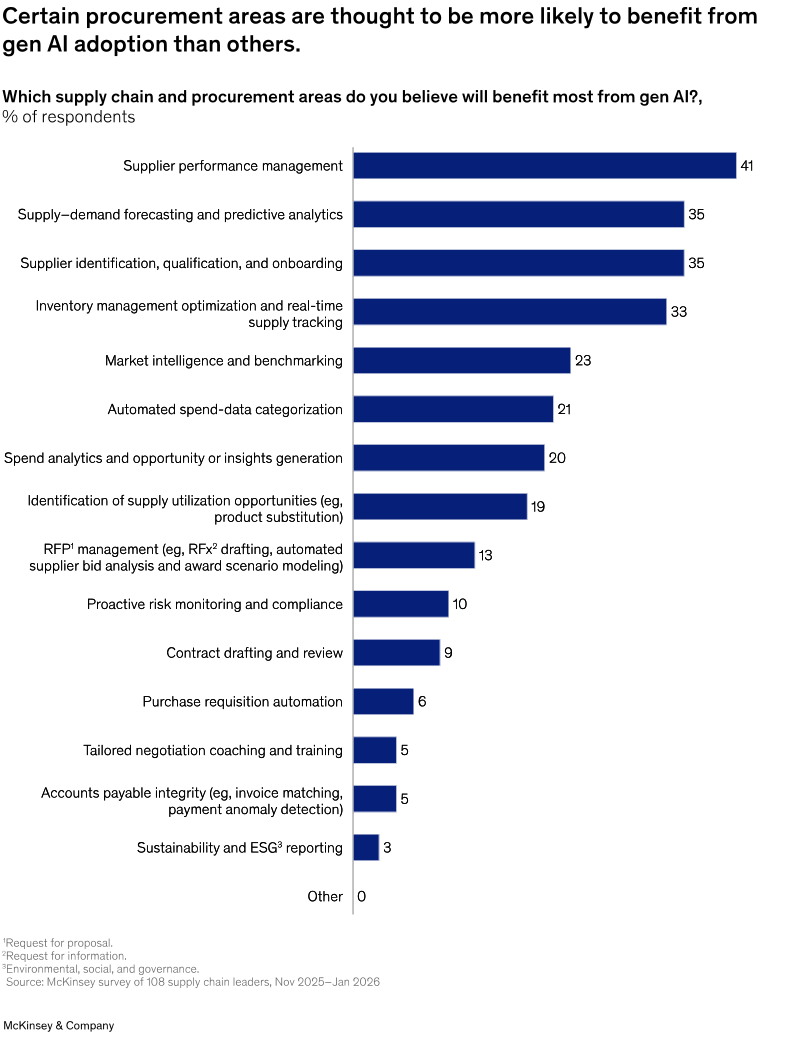
Conversely, surveyed leaders perceived areas such as contract drafting and review; tailored negotiation coaching; proactive risk monitoring; accounts payable reporting; and environmental, social, and governance reporting as less likely to derive value from AI. In our experience, there are opportunities to use AI to enhance these areas, but leaders may not yet see the value in them, because they require better data and capabilities or because organizational change is needed to redesign workflows and incentives.
Where AI is delivering value first
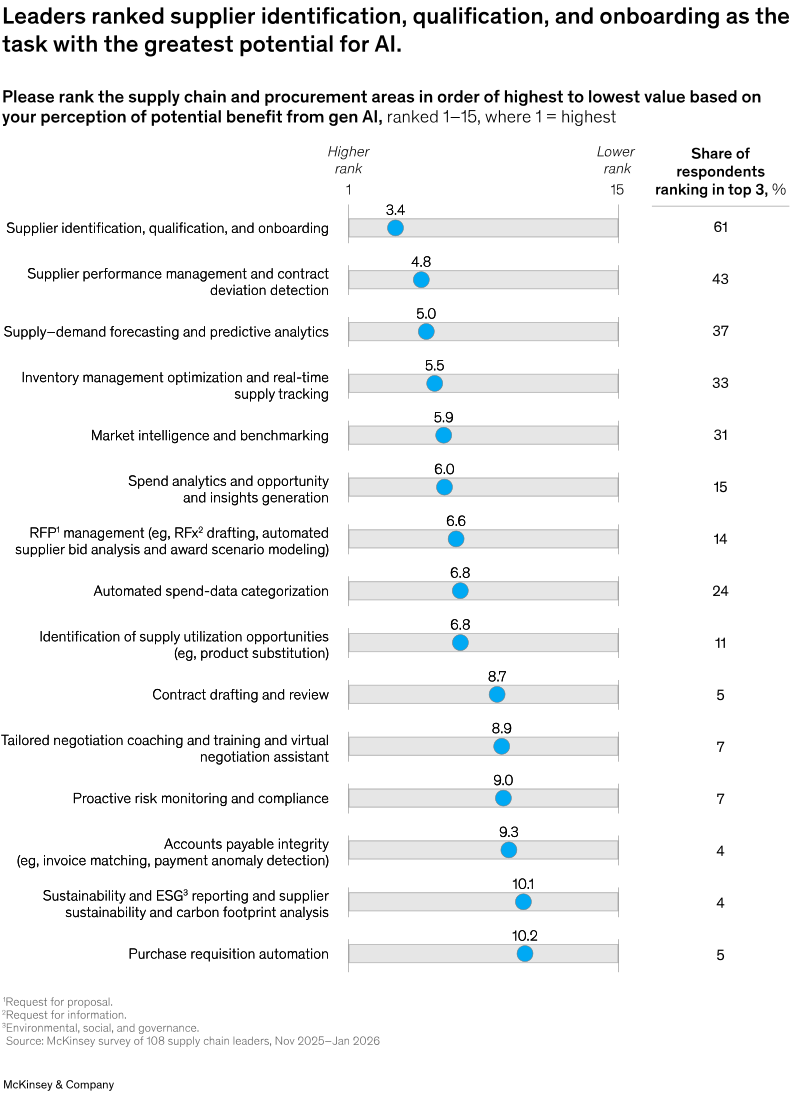
Surveyed leaders said they believed front-end supplier engagement (including supplier identification, qualification, and onboarding) will offer the greatest potential for AI. Additional high-potential use cases include supplier performance management, demand forecasting, and inventory optimization—59 percent of respondents stated that supplier-centered use cases were their top choices (Exhibit 3).
In supply chain functions, 47 percent of respondents said they considered AI-driven predictive analytics and insights to be the most valuable application, compared with intelligent workflow automation (23 percent), natural language assistants (21 percent), document summarization and drafting (7 percent), and image or pattern recognition (1 percent). No matter the application, 58 percent of surveyed leaders said they believed the most beneficial types of gen AI systems are human-assisted ones or rules-based agents with low reasoning or autonomy (such as chatbots). Alternately, 42 percent of leaders said the most beneficial types of gen AI systems are agents that could work more independently to self-correct and learn from past behavior or to proactively anticipate needs and make decisions semi-autonomously.
Predictive analytics and AI copilots can augment category managers’ skills by helping conduct ad hoc analyses and generate structured insights, which can inform negotiations and prioritize strategic decisions.
For example, a category manager preparing for a supplier negotiation can use an AI copilot to rapidly analyze their historical spending with the supplier, benchmark pricing across peer institutions, and spot contract leakage or off-contract purchases. Instead of manually compiling data over several days, the manager could receive a structured view of useful factors for negotiation within minutes, including price variance, volume consolidation opportunities, and supplier performance, enabling a more informed and confident negotiation.
But data privacy and regulatory concerns can affect the pace of adoption—76 percent of respondents noted these factors are top reasons for slower uptake. Forty-four percent of surveyed leaders also said that their organizations lacked clear business use cases for AI, which prevented them from investing in these tools.
Leaders can first assess where AI could deliver the most value in supply chain: Start by understanding where decisions are slow, manual, or inconsistent and where such variability can negatively affect operational workflows and margins. Building an integration strategy for AI use cases is the first step in rewiring an organization. Supply chain applications can serve as role models for the rest of the organization to demonstrate the value of using AI.
Translating optimism into capability building
Many surveyed leaders said their organizations have moved from curiosity about AI to proactively implementing use cases in the past 12 months. Roughly 40 percent of leaders said they expect their organizations to see an ROI of two to four times from implemented AI use cases, but 65 percent anticipate 5 to 10 percent cost savings (Exhibit 4). Moreover, 75 percent of respondents say their organizations have a dedicated budget for investing in AI for supply chain, and more than half of respondents say their organization is ready for this transformation and have clean, structured, and integrated data.
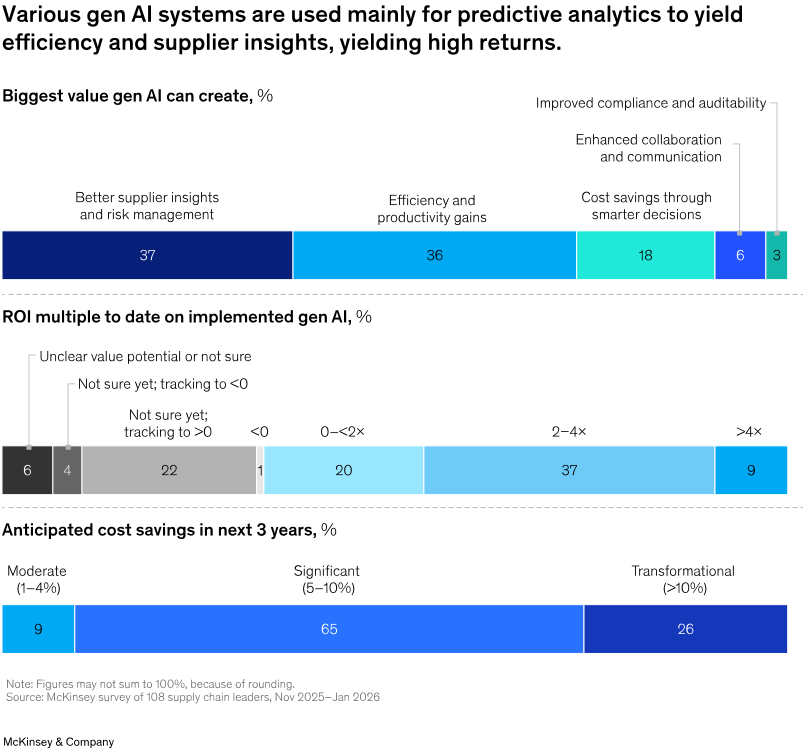
Translating this optimism and these budgets into real ROI requires a clear, value-backed plan that helps leaders prioritize use cases and diligently embed AI into core supply chain decisions and workflows. The most advanced organizations are treating AI adoption as a capability-building journey, adding tools strategically to enhance supply chain workflows.
In addition to supply chain, health systems will have to reimagine processes across clinical operations, revenue cycle management, patient access, and other relevant domains—and all functions will need to work together to drive enterprise value. Most health systems do not expect to build this future alone, recognizing that the technology is not the only catalyst for sustainable impact. Survey results show that 35 percent of leaders prefer to partner with third parties to develop and deploy AI-integrated solutions; an additional 15 percent plan to use partnerships to build and deploy their AI systems at scale.
To protect patient privacy and ensure AI is integrated with strong data governance, advanced organizations are forming joint task forces across procurement, IT, and legal and are partnering with technology and cloud providers. To scale these tools, leaders emphasize the need for clearer ROI measurement, stronger data foundations, and better change management.
The opportunity ahead is clear. Health systems must move beyond isolated use cases and build cohesive systems that use data and AI tools to continuously learn and scale. With all functions working together, health system supply chains can drive better results for clinicians and patients.
William Weinstein is a senior partner in McKinsey’s Chicago office; Borja Carol Galceran is an associate partner in the Barcelona office; and Mark Zaki is an alumnus of the Detroit office, where Simon Kerr is an associate partner.