On February 11, 2026, we launched our latest survey on AI adoption in Hong Kong's workforce—and the findings reveal both remarkable progress and critical gaps that demand immediate attention.
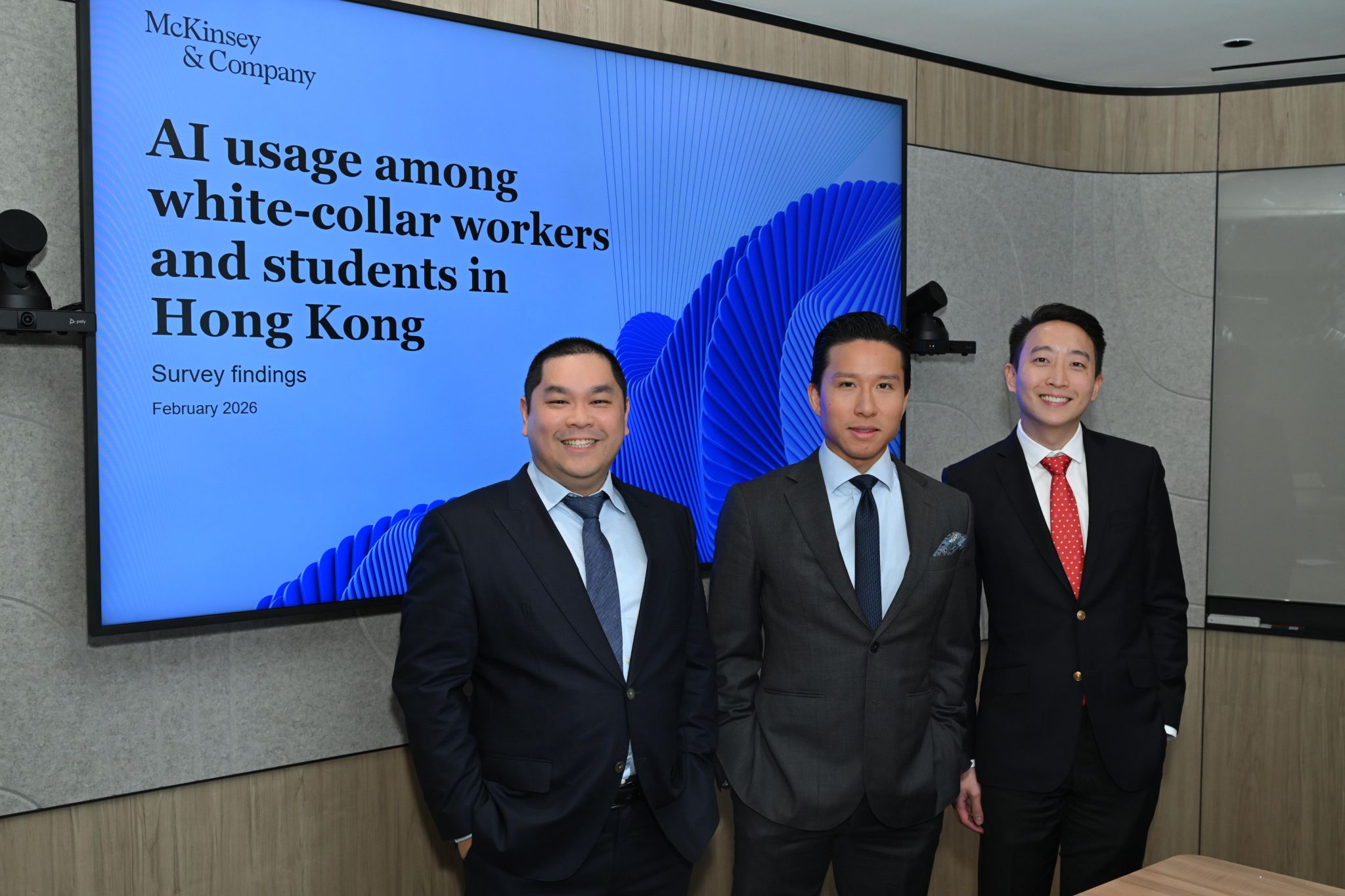

The survey reveals a striking contradiction in the city’s AI journey: while 70% of white-collar workers have embraced AI tools—with 88% reporting productivity gains and over 90% engaging daily— only fewer than 25% deploy AI across complete workflows and only 14% of executives are frequent users of AI, 4-5x lower than the rest of the organization.
Key Findings from 4,521 Professionals and Students:
More than two-thirds of Hong Kong white-collar workers adopt AI in their work
- More than 90% of Hong Kong users engage with AI daily, indicating rapid mainstream integration
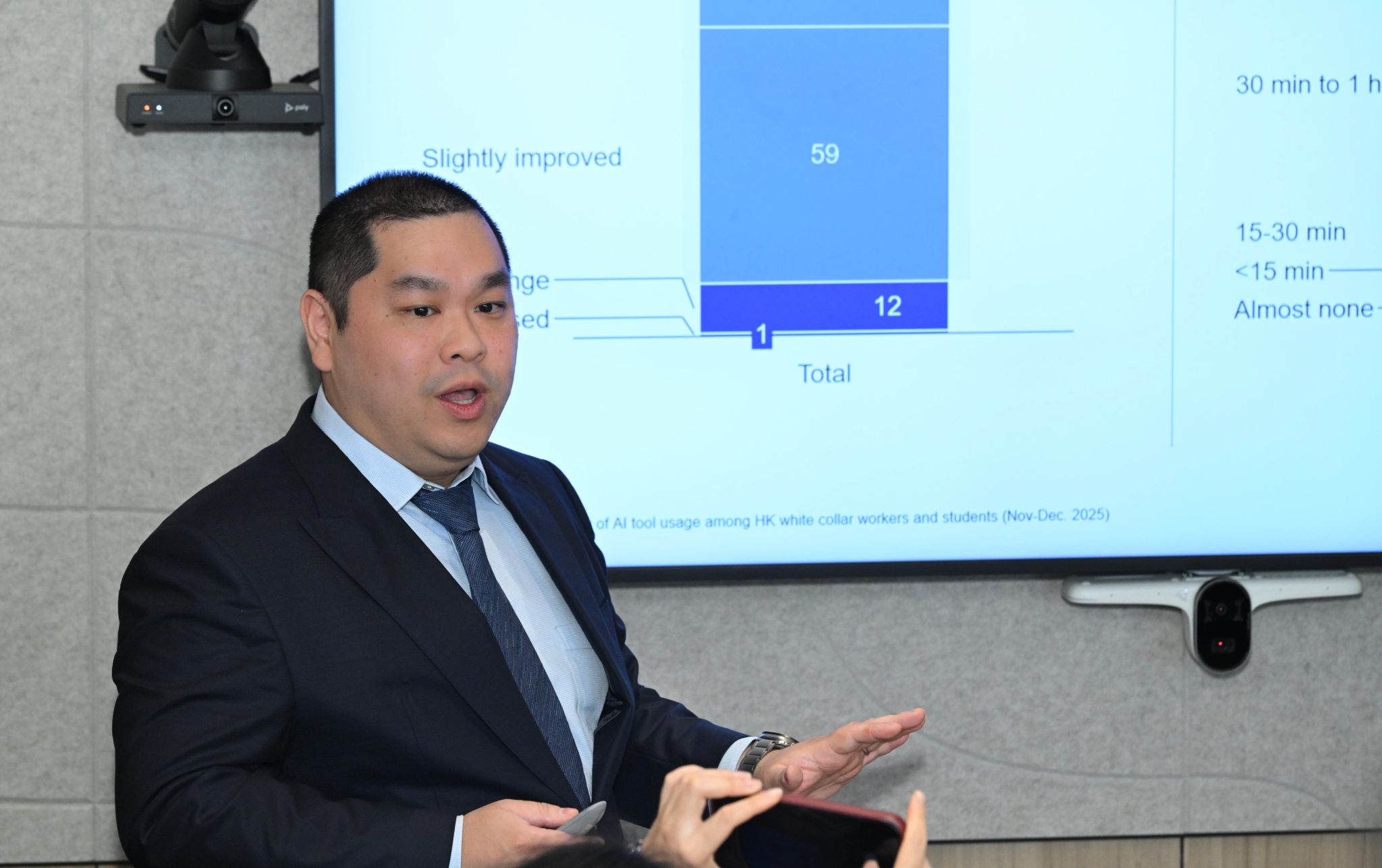
AI is already delivering measurable productivity gains
- 88% of AI tool users reported productivity improvement.
Workers prefer AI as augmentation, not automation
- Over 90% are comfortable using AI for support tasks, but only 40% are comfortable with full workflow automation.
- Fewer than 25% currently use AI to execute an entire workflow end to end.
A pronounced “seniority adoption gap” limits organizational scaling
- Executives are lagging in AI adoption, with only 14% using AI multiple times a day, 4-5x lower than managers and junior staff.
Cybersecurity and data privacy are the dominant barriers
- Data privacy/security is the top concern across almost all industries.
- Other blockers include unclear use cases, limited access, and insufficient training.
Students expect AI integrated careers and are preparing accordingly
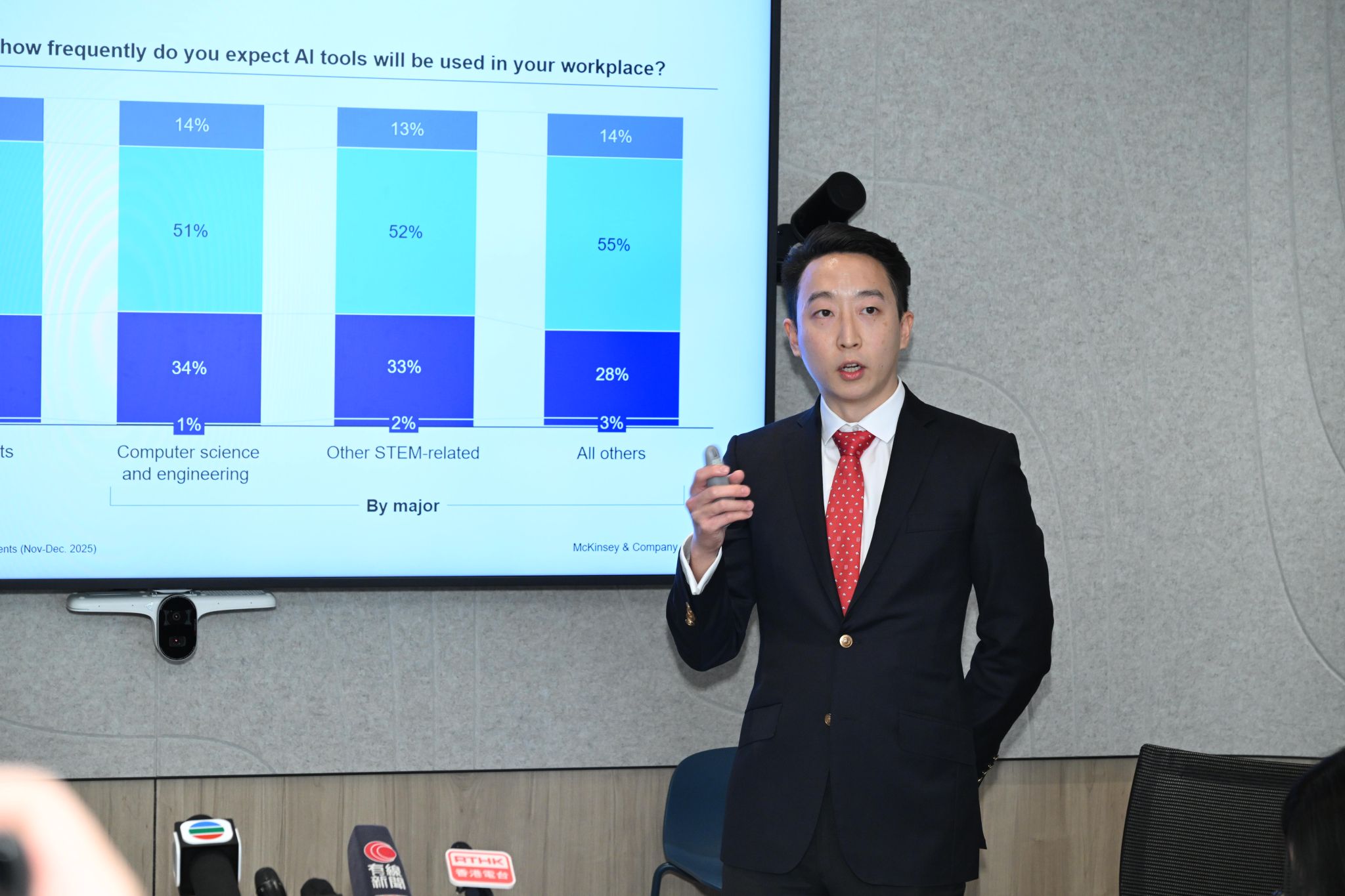
- More than half of students expect to use AI regularly in their future jobs; an additional 14% expect to use AI in nearly every workflow.
- 73% prefer roles where AI plays at least a supportive role.
- 93% are actively developing AI related skills, especially creativity, innovation, and effective prompting/AI interaction.
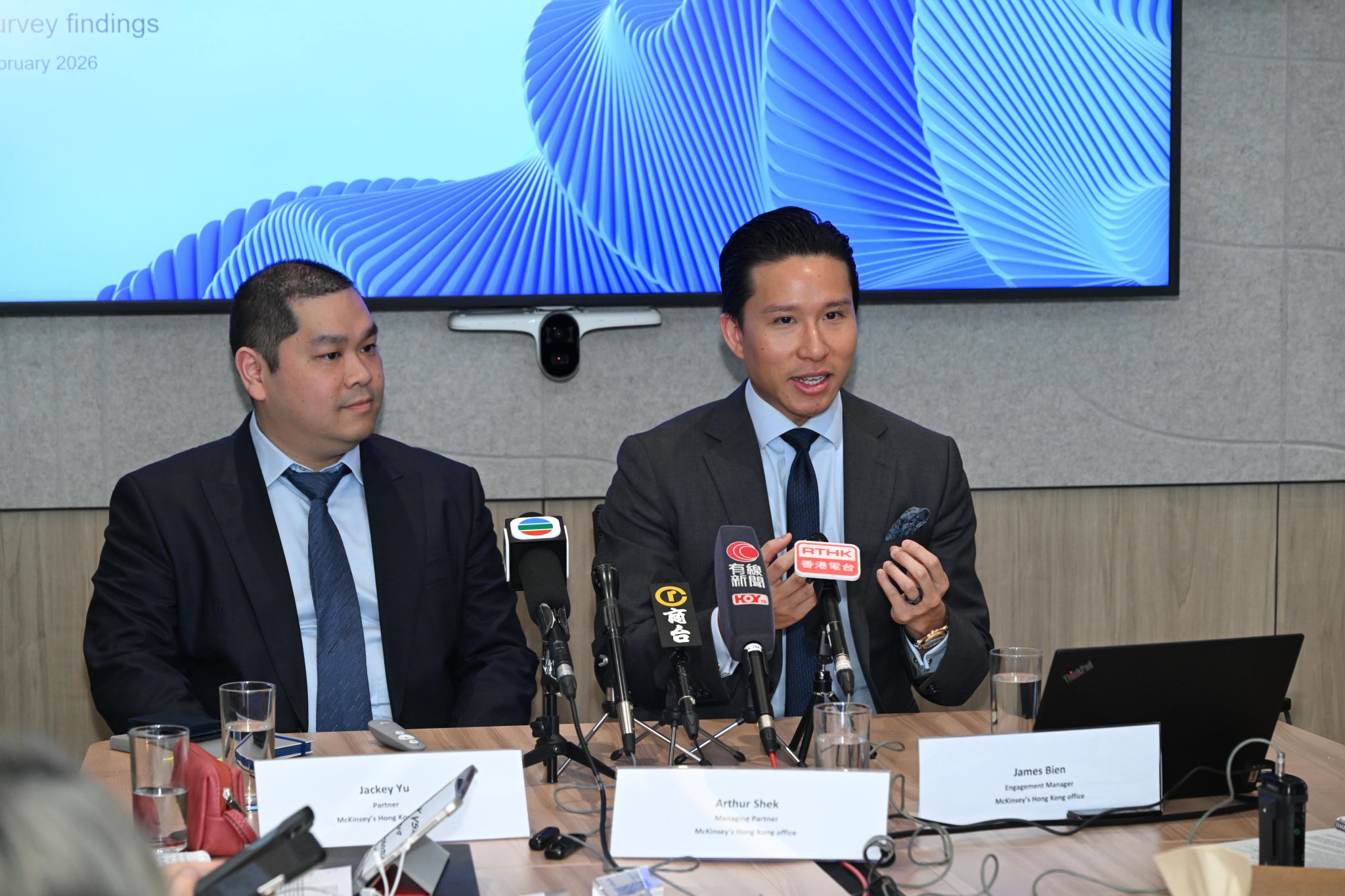
Arthur Shek, Managing Partner of McKinsey Hong Kong, emphasized the urgency: "This research reveals a fundamental disconnect: Hong Kong has built an emergingly AI-ready workforce, but only 14% of executives are keeping pace. The opportunity is clear—but so is the leadership gap."
Jackey Yu, Partner, focused on talent implications: "Our research shows the workforce of the future is already here—73% of students prefer jobs where AI plays a supportive role, and 93% are actively building AI-related skills. Companies that don't redesign their talent strategies will struggle to attract and retain this next generation."
Hong Kong has demonstrated early-stage AI adoption success, but transforming this into sustained competitive advantage requires executives to become practitioners, robust governance to address security concerns, and talent strategies that attract the AI-native generation. The opportunity window is open—but closing fast.