
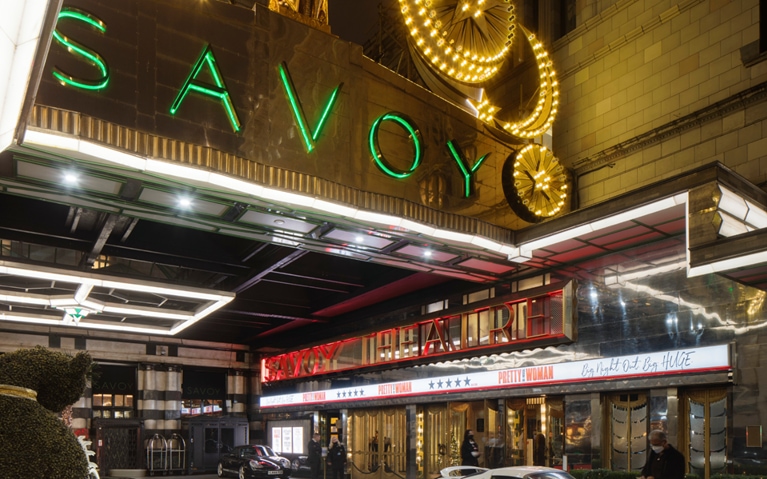
Alumna Melanie Smith (Australia, Auckland, London, 1997–1999, 2001–2009), a Māori from New Zealand now based in London, has built a career as dynamic as the productions she now helps bring to life. Over the years, she has held senior executive roles spanning insurance, telecommunications, and events, before stepping into her current role leading ATG Entertainment, the world’s largest live-theater operator and steward of landmark venues including London’s iconic Savoy Theatre.
For Melanie, the role is the natural culmination of a lifelong love of theater and a leadership approach grounded in operational excellence, deep customer focus, and genuine respect for performers and frontline teams alike.
In this conversation, she shares why she believes theater is truly “AI-proof,” what frontline roles have taught her about leadership, and how she accomplished the extraordinary feat of visiting all 197 countries in the world.
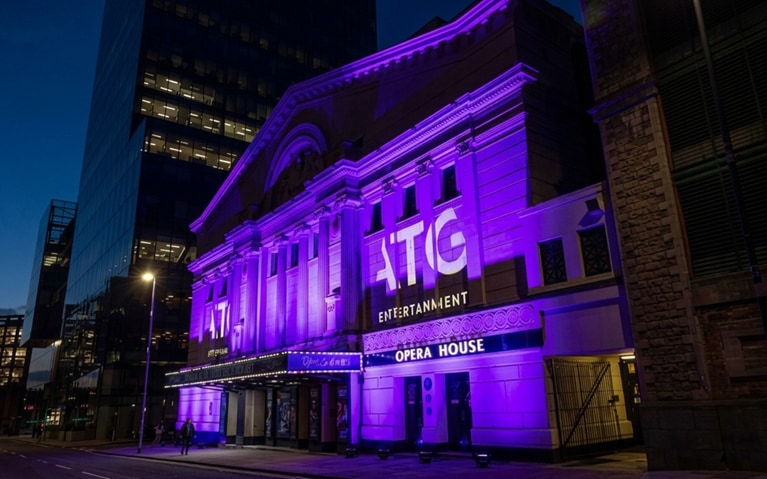
ATG comprises so much in the arena of live entertainment: venue operations, ticketing, production, and audience experience. What was most compelling to you when you took the CEO role?
Fifteen years ago, I applied to work here in a different role. As part of preparing for the interview, I went to 30 theater productions. I wasn’t the right person for that role at the time, but the experience stayed with me. I discovered that I really loved theater, and I have been going ever since. I’m also on the board of Sadler’s Wells, a major dance institution in the UK, so theater and live performance have been part of my life for a long time.
The role brings together several things I care deeply about. I love frontline jobs and frontline teams. Running ocado.com (the world’s largest online-only supermarket) was about delivering exceptional experiences through 6,000 drivers. Working in grocery and retail was about serving customers well every day. And in theater, the frontline has this extraordinary advantage: audiences arrive happy. People want to be there.
The other part is digital and customer experience. There is real opportunity to improve user experience in theater. So, in many ways, this is my dream job. I didn't even negotiate my contract, I just said, “When can I start?”
ATG recently went through a period of significant change and international expansion. How do you think about honoring that momentum while shaping what comes next?
I’m excited about growth across every dimension: growing the venue portfolio, improving the ticketing platform, strengthening relationships with producers, and funding more work. If anything, I would say I came in trying to figure out how we go faster.
What skills have traveled with you across all the industries you’ve worked in, and what have you had to learn along the way?
The first capability that has traveled with me is a huge passion for the frontline.
Frontline jobs are hard. In theater, they often involve working on evenings and weekends, expending a lot of energy, and navigating difficult moments with customers, creatives, and complex live events. I try to spend real time with frontline colleagues because they are the people who bring the business to life every day and they’re a lot more important than I am. And I’m glad to help out when necessary. I will happily scan tickets or clean bathrooms.
Nine weeks into this role, I had already visited 36 of our 70 venues and spent time with general managers, backstage colleagues, and front-of-house teams.
The second capability is digital experience and user experience. I’ve worked in online businesses, and I think there is a lot that can be done in theater to make the customer journey better.
The third is commercial discipline. On a good day in retail, you make 1% profit. My time in retail taught me to make every penny count.
Live entertainment depends on memorable experiences, but also on strong relationships with talent, producers, venue teams, and communities. How do you define success across those stakeholders?
The most important people in the industry are the content creators and producers.
Audiences are not primarily coming because it is an ATG venue. They are coming because of what is on stage. The venue matters; we want it to be clean, welcoming, and well run, but the content is the reason people buy tickets.
Producers have an extraordinary job. They are CEOs of start-up temporary businesses. They identify winning content, raise capital, secure venues, assemble casts and directors, and bring talent together for a defined period of time.
That requires rare skill. My job is to make producers’ lives easier.
You’ve said you have a passion for live entertainment and world-class experiences. What does a world-class entertainment experience mean to you?
For me, a world-class entertainment experience is one that leaves people filled with joy or thinking differently.
Yes, the practical experience matters: getting in smoothly, having a drink, enjoying the space. But the heart of it is the content. I want the very best content on our stages: content that moves people, changes how they think, or gives them escape when they need it.
That might be a play that is deeply affecting, or a production that is simply joyful.
Where do you see the biggest opportunities for theater businesses to evolve without losing what makes live performance emotionally powerful?
The core of theater does not need to change. It is live humans performing in front of live humans. That is what makes it distinctive. In my view, it is a largely AI-proof business.
Technology should enhance the experience around the performance, not replace the magic of the performance itself. There are many ways to make the journey better: faster bathrooms, premium lounges, better intermission service, grab-and-go technology, and smoother ordering.
McKinsey is marking its centennial and talking about bold, brilliant moves. What is your next bold, brilliant move?
My next bold, brilliant move will be retiring, but not anytime soon.
Is there anything else about you that we should know?
In 2019, I finished visiting all 197 countries in the world. It turns out I wasn’t the only McKinsey person trying to do it. I know of other current or former McKinsey people who have done the same. [Read our 2018 article on alum Sal Lavallo.] McKinsey people are, on average, more obsessive than your average human.
At the time I finished, there were only a few hundred people in the world who had visited every country. Several were connected to McKinsey, which feels disproportionate. I think it speaks to the particular nature of McKinsey folk.
This has been so much fun. Thank you so much for speaking with us!
Thank you!

