
Seventeen years, one global architecture powerhouse, and countless audacious projects later, Sheela Maini (Copenhagen, 00-02) still insists she’s not a designer. And yet, as CEO of Bjarke Ingels Group, she’s been designing something all along: the blueprint for how BIG runs, grows, and thrives. While the architects sketch skylines, she engineers the framework that makes those ideas possible.
In this Q&A, Sheela shares how she keeps BIG’s biggest ideas from toppling over—by balancing creativity, strategy, and just the right dose of pragmatism.
* * *
You’ve been CEO of Bjarke Ingels Group since 2009. Walk us through what you do.
I've been here for 17 years (I first joined as CFO and the following year was named CEO), which is a long time to be in a C-suite position in one company, and not something that I had anticipated. My role has changed over time as the company has changed. But one thing that hasn’t changed is that Bjarke, who is our founding partner and our design partner, leads the design of all the projects that our clients contract from us. I am not an architect, but I lead the design of our organization and the profit and loss and all the infrastructure that allows the creative people in the firm to be creative.
What would you say your biggest challenge is?
There is an inherent challenge in leading a creative company. The reason that the Bjarke Ingels Group was founded was to contribute to the positive development of buildings and cities and destinations for people – to make lives better through physical space.
But making things as good as you can from a creative perspective doesn't always match the financial boundaries or the time boundaries associated with the contracts that you're awarded. So there is an inherent conflict there. How do you manage creatively within financial boundaries? But if you don't have the budget and the timeline, then no idea could ever materialize, because every idea needs to have a framework within which it's measured. So the biggest challenge is also the biggest positive.
One of my own challenges over the years has been twofold. One is to subtract myself from the daily decisions as the organization grows, and to give power to the people whom we have hired over the years and who are much smarter than I am at various things. So I step back and let them hold the mandate to develop the organization. I have a strategic perspective rather than a daily decision-making perspective. That is still difficult for me. And the other thing that is a challenge is maintaining the sense of DNA as the company grows and spreads globally.
What continues to excite you about your role?
I continue to be excited by the competitions we participate in. I’m excited by new opportunities, vetting, prioritizing, deciding which opportunities to go for, which new markets to break into and how, and which potential clients to meet to show them that we could contribute to their projects.
A long time ago, Bjarke and I put together a bucket list of projects that we really want to do before we retire. We put an airport on that list 15 years ago, and we just won our first airport, Zurich, two years ago. That project will be completed in 2035. It’s currently in the design phase. It's a very complex project because you have to build it while running the existing terminal. You can't disrupt any air traffic or any of the retail income that they have from passengers flowing through the airport terminals.
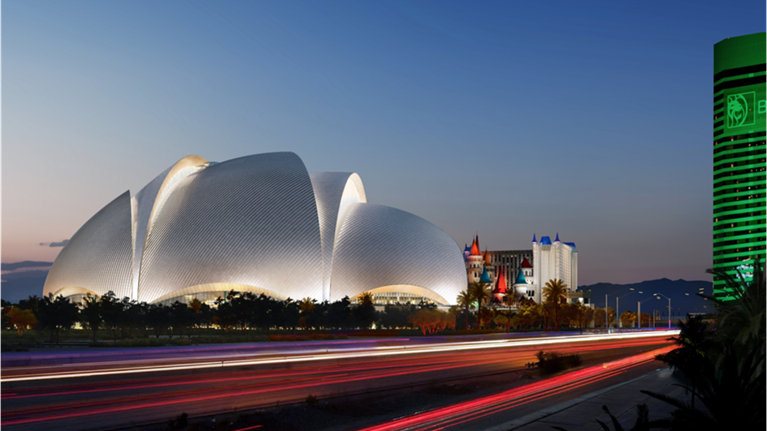
I am also very excited that we broke ground on our first stadium in Las Vegas a few months ago, because a stadium has also been on our bucket list for a long time. So we continue to participate in these competitions and we get a little bit smarter every time.
Even though you're not part of the actual design, you must have opinions about the architecture that BIG creates. What are a couple of your very favorite projects over the past 17 years?
This is going to sound a little clichéd, but Bjarke said in an interview many years ago that asking him that was like asking him to choose which of his children he loves the most. I can point to things we’ve built that I like more than others, but I'm not sure how to evaluate them because there's a reason that every building looks the way it does.

We’ve done small things like the entranceway and the gymnasium of the exercise hall at Bjarke’s old school here in Copenhagen. It's amazing. The roof of the gym hall is curved according to the formula for the curve that a ball makes when you throw it. It's such a small little thing that the public will never see, but it's such an amazing addition to this school and it creates these hilltops in their courtyard that all the students flock to on a sunny day.

I'm infatuated with our Via building in New York, which is the project that brought us to that city. It's a residential building that kind of looks like a slice of cake. And it might be one of the first ‘courtscraper’ buildings in the world. It’s a skyscraper on one end, but then it flattens out on the other end, and there's a common garden in the middle for the residents to enjoy. I love that building, but I think I love it as much for its significance in my career and that it was the launch of our work in the U.S. and my move to New York.
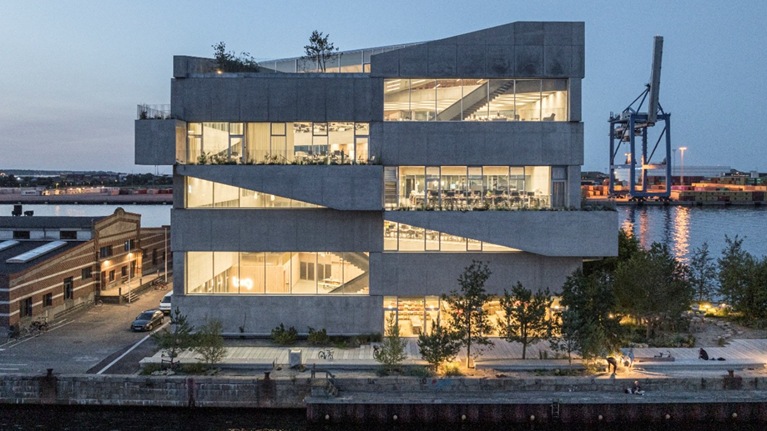
I’m talking to you now from our headquarters in Copenhagen, a building that we designed and built and financed ourselves. It’s also one of my favorites because I am so involved in it and have been from its initiation, and because I work in it every day. It does hold a special place for me. It's a unique building. It’s not huge, but it showcases so much of who we are and how we work and how we think.
What would you say is the best advice you ever got from a mentor while you were at the Firm?
I got lots of good advice, but the advice I use the most relates to how to communicate your thoughts to your stakeholders, because I work with architects and they're very visual. So how I put my thoughts together in a horizontal document or in PowerPoint is really important to guiding the conversation and reaching a decision. I learned to never overcrowd a slide.
I also worked with a Partner who always said, “What's the so-what?” I don't know if that actually counts as advice, but it's best critique I ever got.
Has the alumni network helped you in your career?
Yes, it has. I worked for alumni in the first jobs that I had after being at the Firm. It helped that there was a network of people that understood the toolbox I had as a McKinsey alum. I was just two years out of school, but I got some very interesting job possibilities that I wouldn't have gotten if it wasn't for a network that understood what you learned in two years at the Firm. Working at McKinsey and also applying and tapping into the alumni network fast-tracked my career.
What’s your favorite city to get lost in?
New York is still my favorite place to get lost in. I lived there for eight years and I feel very comfortable there, but at the same time, New York changes constantly. There's always something new to see even in the neighborhoods where I lived for almost a decade. And New York is infinite. I go back frequently because we have an office there. When I lived there, I loved / hated it, because there are also so many things to be frustrated about in New York. But there are more things to love, and it is very hard to take New York out of yourself once it’s in you.
What inspires you outside of the office?
I read a lot. I've also been listening to a lot of podcasts and I watch a lot of movies and shows with my three children, because that's an easy way to connect and start conversations with each of them in the place that they're in.
Right now, I'm very inspired by Louise Parker, a British dietician who has inspired me for the past fifteen years.
Later today, I'm taking a course in ocean kayaking. I turn 50 in February, and I spent the last few days of my most recent vacation thinking about what kind of 50-year-old I want to be. I want to dedicate a little bit more time practicing things that are good for me.

