
When Akshat Harbola (Gurgaon, Brussels 05-14) isn't busy making Spotify a household name in the Middle East, North Africa, and Pakistan, he's probably jamming out to his favorite rock tunes – but what drives his passion for music, and how is it shaping the future of streaming in the region?
With a career spanning nearly a decade at the global music platform, Akshat has spearheaded the launch of international markets, established local operations, and developed culturally tailored strategies that resonate with the unique preferences and behaviors of diverse populations. His leadership style, marked by a deep understanding of cultural nuances and a commitment to inclusivity, has been instrumental in supporting local artists and creators, and in building a robust and engaged user base.
We sat down with Akshat recently to discuss his love of music, the challenges he has faced, and the strategies he has employed to drive Spotify’s growth in MENAP.
You have a very cool role at Spotify. What inspired you to join the company, and what keeps you energized?
Music has been a huge part of my journey ever since I can recall. Sometimes I can define my life journey based on what music I am listening to or what genres I am dabbling in. So being a part of the music industry was personally very meaningful for me.
Another thing is that when I joined in 2016, Spotify hadn't been launched in South Asia or in the Middle East. Globally, we hadn't gone public, so it was very early days. It was a once-in-a-lifetime kind of opportunity where I could sharpen my entrepreneurial saw a little bit, but at the same time work in an industry that is personally meaningful.
Finally, my bar for what a good culture looks like is very high, and Spotify has a great culture.
Two things really energize me. One, streaming in this part of the world is still an emerging product and category, so there's a huge market development component to the role and what we do here at Spotify. So I think that's very exciting. The second piece is working with incredibly talented people, both as part of the teams that we have but also working with creators, building new styles, and coming out with new music and podcasts.
What types of music do you listen to?
At this point it's very broad. But I would say, foundationally, I'm a rock music fan. Everything from the '70s onwards: the Led Zeppelin era and then into the Metal era and Grunge Rock. So I'm very broad-based, but if you pushed me into a corner and asked me to answer, then it's rock music.
You’ve worked in multicultural environments throughout your career. How has that shaped your leadership style and your decision-making?
We are a European company, but we're listed in the U.S., so we see so much cultural diversity. My team comprises 15-plus nationalities, and each one of us brings our own cultural mores, assumptions, and heuristics to the job.
As a leader, you really need to understand the context and where they are coming from, and then try to adapt your operating style to that. For example, some team members prefer straight talk, partly because of the cultures that they come from. Other team members would prefer a more relationship-oriented style, where once you're in a deep relationship where there is a personal connection, you can have harder conversations.
Another way it has helped me is also how this translates into our business imperatives. You have to look at each of the consumer markets and what cultural context they're coming from to figure out what is the right strategy.
Speaking of that, what challenges and opportunities have you faced in scaling Spotify in diverse markets?
We are a subscription product, so a lot depends on willingness to pay, which is not just about whether the potential customer has money. It's also about what their relationship with money is, and how they’ve grown up thinking about money based on their cultural context. So there are a lot of determinants which also play out in the strategy level.
For example, from the outside, the Middle East and North Africa may look like one cultural monolith, where everyone is speaking Arabic. But the reality is that there is Egyptian Arabic, and then there's Moroccan, and these are completely different dialects of the same language. The role of music in society also varies a lot between these two regions.
And there are the traditional powerhouses in this region where music has been produced for decades, and then there are other countries, especially in the Gulf, where music is now important but there haven't been traditional powerhouses in terms of producing music. So for us, that means that we have to appreciate this diversity and tailor our strategy to what really works in that cultural context.
What are you seeing as far as trends in the region?
MENAP was the fastest-growing market in the world last year. There's a huge body of traditional music genres on the one hand, and then a lot of new genres emerging. Even just during my time here, I've seen actual new genres, which were previously just street conversations, emerge and hit the top of the charts.
There's a lot of dynamism in the space. And then you have artists who may be raised in different parts of the world, but they're singing in Arabic, actually pushing boundaries.
In most of the market, the median age tends to be under 30. In many of them, it's actually under 25.
I'd say a second trend is that in many markets, particularly in markets like Saudi Arabia or the United Arab Emirates, the governments are getting serious about supporting music. They're looking to create ecosystems where they haven't traditionally existed.
On our side, we're running masterclasses with early-stage musicians here in the United Arab Emirates just to explain to them the business side of music and how streaming works, and how the streaming economy works.
Podcasts have seen a huge growth in listening hours on Spotify in MENAP. What do you think is driving that surge, and how do you see the podcast landscape evolving?
Podcast work is super exciting. One reason a lot of that growth is happening not just in this region but everywhere in the world is that you can listen while you're doing something else. So part of it is due to consumer choices, but ultimately the growth in the region is driven by creators putting great content out there.
Our teams work very closely with creators to teach them the business side of things. In this region, there are a variety of shows ranging from religion to true crime to business, and a lot of global podcasts are extremely popular in the region as well. There's a podcast episode by one of those shows called "Thmanyah," which means "eight" in Arabic. It's the biggest, most viewed podcast episode in the world ever. It's in Arabic, but even non-Arabic people are listening to it with subtitles.
We've also observed that a lot of people want to actually watch their podcasts. We've evolved so if you want to watch a podcast, we give you the ability to do that.
What advice would you give to aspiring leaders who are looking to be impactful in the tech and media industries?
It's important to have a generalist mindset in this industry. You have to be creative, you need to be business savvy, and you need to have tech literacy, and empathy. It's not just about the content or the code. You also need to understand the audience, the economics, and the regulations that you're operating in. So having a generalist mindset really helps, because you may need to change strategies pretty quickly. You're operating in highly dynamic environments.
Secondly, I would say it's important to stay close to culture and innovation. And what I mean by that is that media is shaped by culture, and then it shapes culture. That's what the job of media is, and culture is always evolving. And what is culture? It is how people talk. Where are they spending time? Who are they spending time with? What platforms are they spending time on? What are the new sounds of the younger generation versus the generation before them?
All of this is part of culture, and in the culture business, it's very important to be close to that side of things. On the other hand, you also need to be very close to innovation that's happening on the ground. I like to follow what's happening in the startup space in areas that are adjacent.
I tend to follow what's happening in the media tech space, because sometimes it could point toward gaps in our offerings or a business problem, which we can then work on, because the startups would tend to go up with the hardest, unsolved problems.
And finally, embrace ambiguity. This industry is definitely not static. What works in the U.S. doesn't work in Brazil or in India, and what works in music may not work in podcasts, or in audiobooks, where we operate as well. The pace is relentless. Sometimes you may be running multiple parallel experiments at the same time, 80% of which will not work.
That’s all great advice! Speaking of that, what’s the best piece of advice you ever received from a mentor during your time at the Firm?
Something one of my mentors shared with me was "Learn how to learn. Everything else changes." It took me a while to fully grasp that, but it’s quite profound. And that advice stayed with me and taught me to stay adaptable and be a lifelong learner.
What is a song, an album or a podcast that you have been listening to on repeat lately?
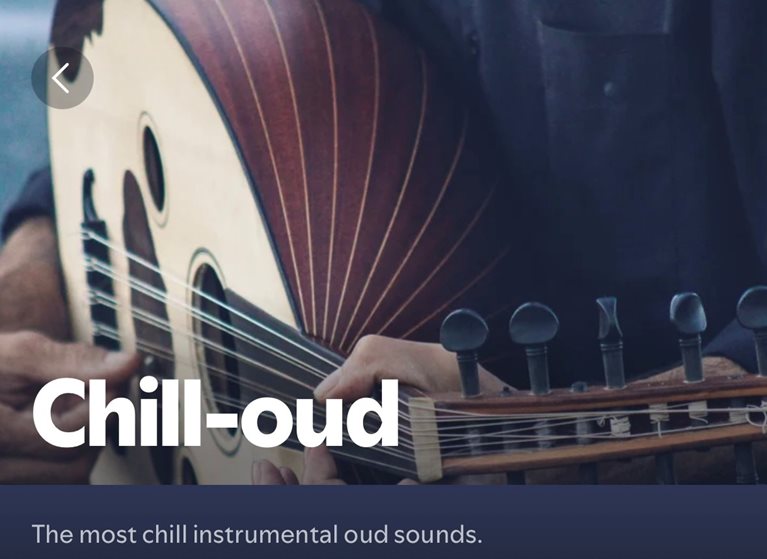
There is a playlist that my team curates that I listen to a lot. It's called "Chill Oud," a play on "chill out." An oud is an Arabic string instrument that is very popular in the region. The entire playlist is a loungey, relaxing playlist, all instrumental.
Also, there's a track I've been listening to for a while: “Messy,” by Lola Young. It's been charting in a lot of countries.
There's no good reason that I’ve been listening to it. It's just a great song. And that's the great thing about music. Sometimes you don't need a reason!

