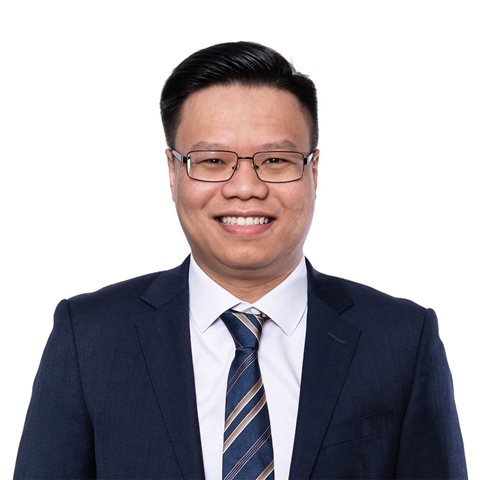
Q&A with Alex
Interviewer: So, I heard that you always dreamed of being a consultant.
Alex: Not quite. I entered business school with the goal of doing anything but consulting. Then one August afternoon before my final year at Cornell Business School, I had a great but unusual conversation with a McKinsey senior associate out of the Pittsburgh office. I left thinking, “Well, that went in a completely different direction than I had expected.” I got feedback 2 years later that she considered that conversation extremely offbeat, but was convinced that I'd be a good fit.
Interviewer: And you obviously agreed.
Alex: I received offers from other consulting firms, as well as a couple of industry jobs—I had worked in industry before getting my MBA—but I thought there really was no contest in the quality and support McKinsey offers. I was right. McKinsey has provided private coaching sessions to bolster my communication skills.
And all the training programs have been extremely beneficial developmentally, from a personal and a client-relationship perspective.
Interviewer: So there’s real depth in the promise of individual growth.
Alex: McKinsey really lives up to its value of personal development, with the training, personal coaching, and the flexibility. I’ve had at least one full week of offsite training each year that I’ve been here, alongside other peers who started around the same time I did—in addition to regular personal coaching sessions.
Interviewer: Speaking of flexibility, you took advantage of the Take Time program.
Alex: I sure did. I pursued my passion for travel and foreign languages. I took time off to improve my Chinese (for about 5 weeks, back in the fall of 2012) and to learn Spanish (for about 7 weeks, back in spring of 2013). I might've learned a little salsa too, along the way.
Interviewer: You have an interesting metaphor for McKinsey people—a kind of intellectual first responder.
Alex: McKinsey consultants are to problems like starving dogs are to red meat. Any sort of interesting problems will result in a very engaged response.
Interviewer: And as a result, those are pretty terrific people to be around.
Alex: I've built a network of friends and supporters that have been instrumental in keeping me excited. I would consider my life significantly emptier without them.
Interviewer: In your mind, some of the stereotypes about a consulting career are off-base.
Alex: It’s a bit of a misconception that consulting has long hours and is tough. While that's true, it is at least partially, if not mostly, by personal choice. McKinsey is a place where a bunch of self-motivated people are left to "have at it," and the tendency is to make choices that cause us to sometimes do more and work longer hours than we strictly have to.
Once you realize that the majority of the lifestyle is really self-driven, the question of lifestyle, manageability, and sustainability is easy. You just need to prioritize lifestyle high enough.
Interviewer: You seem like an outspoken guy. Did you ever feel like you had to rein that in, to put a muzzle on Alex?
Alex: At the end of my first study we had a feedback session with my engagement director. We talked about one of our important values—an obligation to dissent. He encouraged me to do even more of that. He said he felt that at times I was holding back—which I was.
So I was being encouraged to speak up more, even as a first-year associate.
Interviewer: You’ve developed Alex’s Rule of Four to describe whom the firm attracts. It’s not officially sanctioned; it’s Alex-sanctioned. Let’s hear it.
Alex: I think our people can be described in four primary ways: they are extremely curious, achievement- and results-oriented, relationship-driven, and “explorers.”
Curiosity and achievement drive our distinctive value proposition of creating client impact.
Relationship-driven reminds us that we seek to be trusted advisors.
As “explorers,” McKinsey people are free to develop their own path to help them grow. That requires a lot of infrastructure and development opportunities.
I started off as an “explorer,” and my projects definitely reflect that. I've had bank, industry, and retail clients, and I've covered risk, organization, marketing, and procurement functions. Classic random walk. I think the exploration has also helped me to discover that I’m more relationship-driven than I thought.
It’s an unexpected benefit of McKinsey—you have the opportunity to discover and build on your strengths.
Interviewer: Within all the diversity of backgrounds and personalities, what have you found as a common thread?
Alex: The uniformity of the way we think about the problem. Listening to a conversation in the Beijing office one afternoon, I said to one of my colleagues, “This sounds exactly like the conversations back home.
What's really different about the Beijing office and the Pittsburgh office—or the Boston office where you’re from?”
She mulled it over a while, and responded: "Well, the food at lunch is much better.” (Having had lunches in all three locations, I agree. Hard to beat Peking duck for lunch).
Interviewer: What are your final thoughts on your experience here?
Alex: It's been a more exciting and interesting journey than I'd envisioned. There is so much to do, and the fact that the finite nature of time won’t let you pursue all the options in front of you can leave you with just a tinge of regret.
Education
-
Cornell University
MBA
-
MIT
BS, MS